



I won’t sugarcoat it…
Things aren’t looking quite as bright in the U.S. padel industry as some people might have you believe — or as many self-proclaimed pundits predicted they would be a few years ago.
Yes, clubs and courts still continue to open from coast to coast and everywhere in between… Yes, the sport is starting to gain more awareness in the U.S. thanks to padel pop-ups at Coachella and CNBC broadcasting Pro Padel League matches… And yes, USA Padel is pulling out all the stops in an effort to get more people playing.
But there also appear to be a growing number of storm clouds on the horizon…
Once loud, seemingly baseless calls for 30,000 courts in the U.S. by 2030 eventually fizzled into still-confident-sounding predictions of 20,000. More recently that bar has quietly been dropped yet again, with many insiders now admitting that even getting to 10,000 by 2030 may be a serious stretch (which, keep in mind, is still monster growth!)
Meanwhile, clubs have started closing in once-promising padel strongholds like Houston and Orlando, and by some accounts, in certain (and often surprising) parts of the country, as many of half of all padel clubs are now discreetly up for sale.
There Are Some Bright Spo(r)ts However…
In fact, in a recent conversation with Jo Vos (who serves as the Chief Marketing Officer of our Padel Nation preferred partners at Playbypoint) about the current state and future of the U.S. padel market, she tells me:
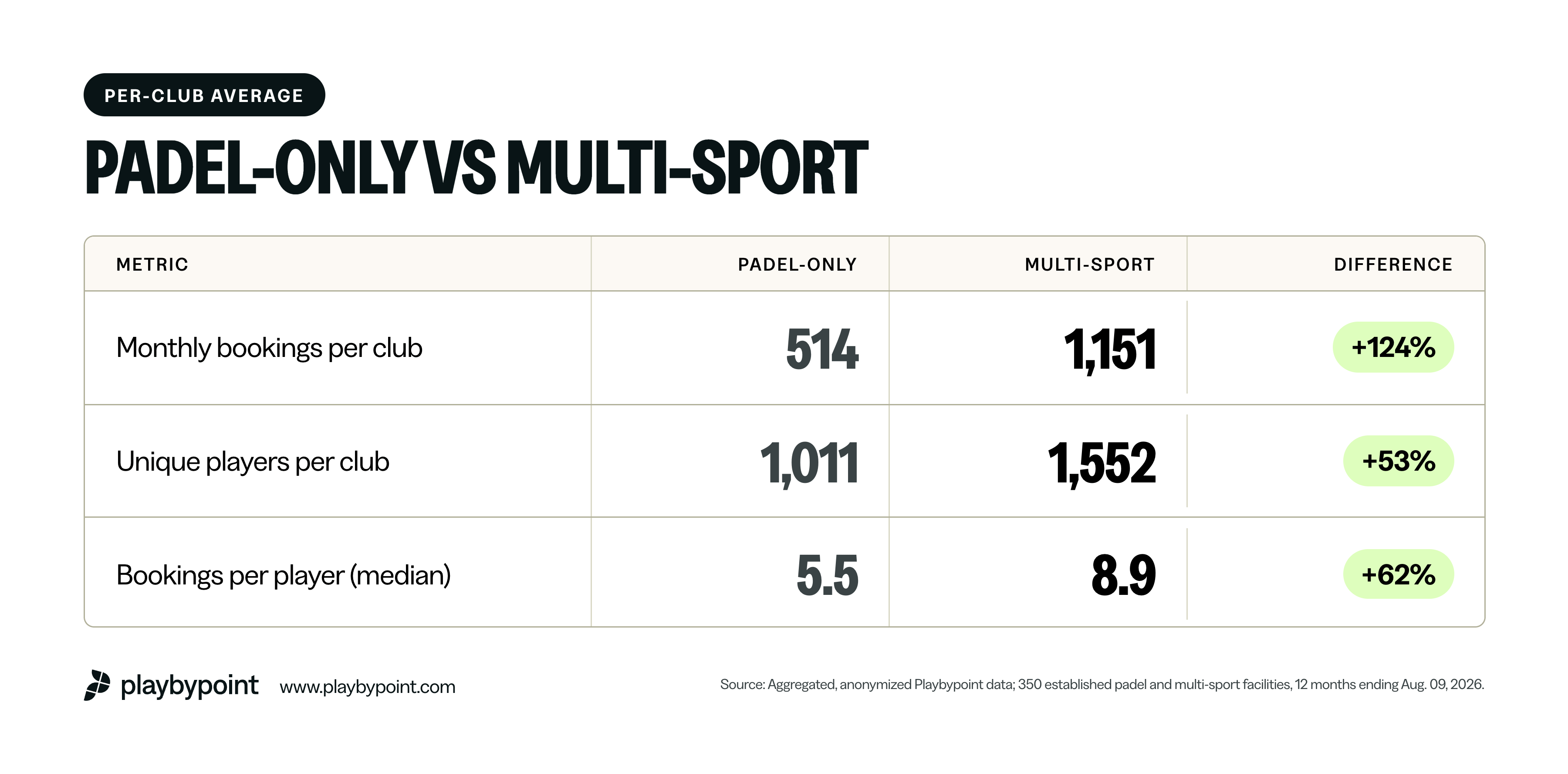
Over the last twelve months, established multi-sport facilities on Playbypoint handled 124% more monthly bookings than padel-only clubs, and served 53% more unique players. For an operator weighing what to build, the multi-sport model isn't a hedge. It's a growth strategy.
I’ll be honest, I was a bit shocked by those numbers, especially as someone who has always leaned more towards padel-only in the whole “Should padel clubs also have pickleball courts?” debate.
But I tend to give a lot of credence to this data given that Playbypoint powers a wide variety of notable multi-sport padel clubs around the U.S., including:
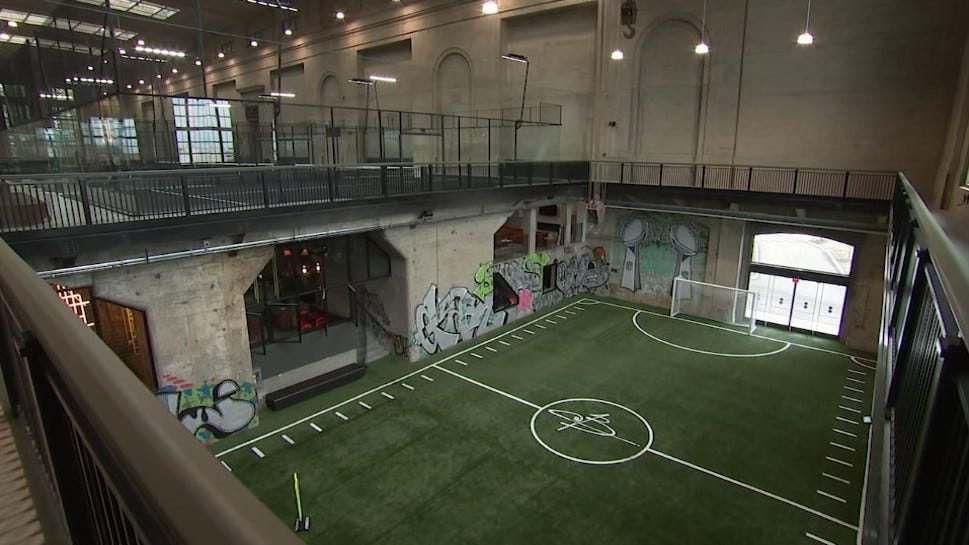
Ballers in Philadelphia, PA (with padel, pickleball, squash, indoor soccer, and more)…
Three Rackets in Broomfield, CO (which will soon open with padel, pickle, and squash)…
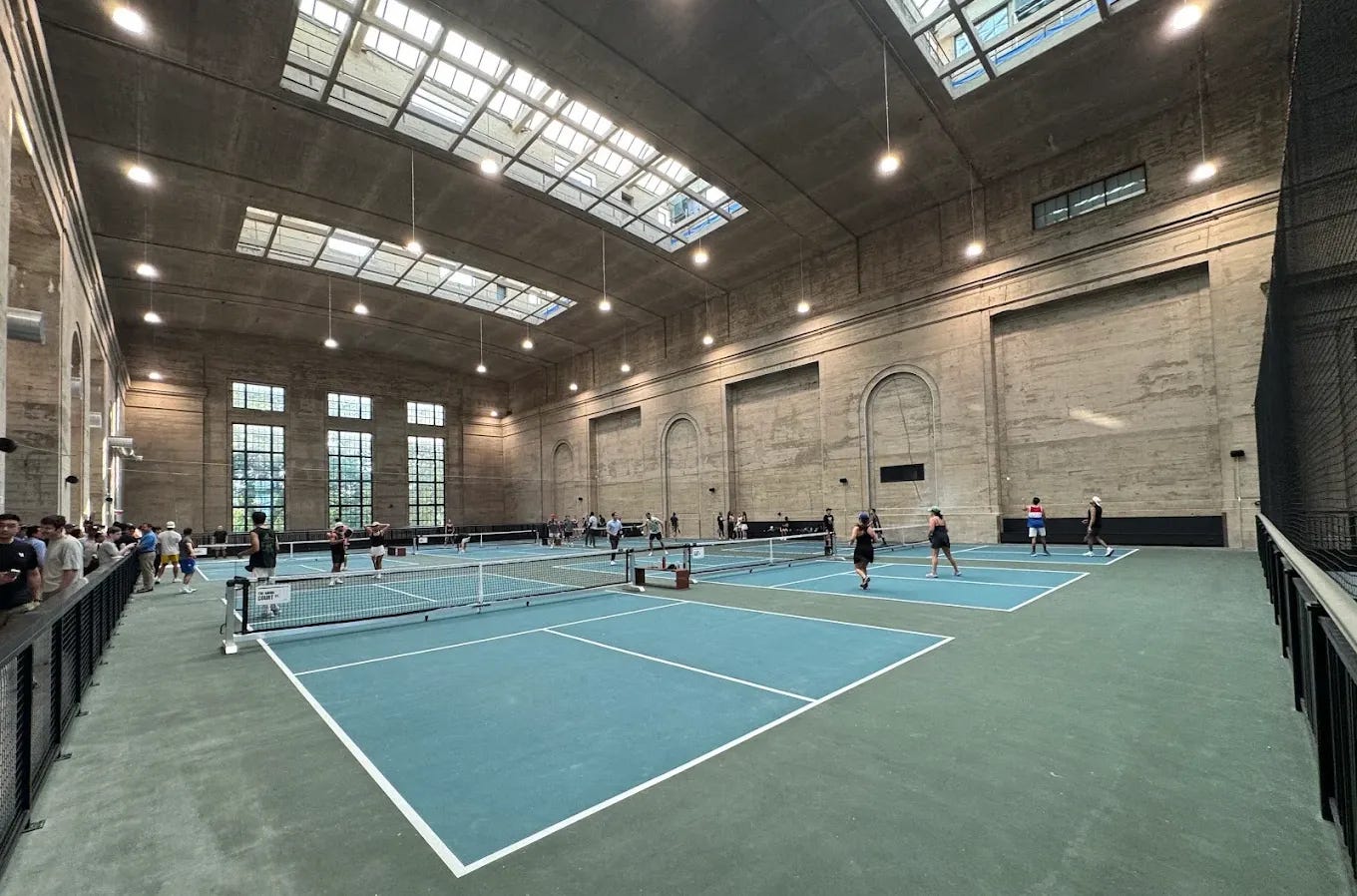
Nicol NJ in Fort Monmouth, NJ (also featuring padel, pickle, and squash)…
The Sports Haus in Norwalk, CT (which offers padel, pickle, and golf simulators)…
CityView Racquet Club in Long Island City, NY (with tennis, squash, and padel from the team at Brisas)…
… and that’s just to name a few.

Then there’s my home padel club in Charleston, SC, which is known as LTP Daniel Island and has dozens of pickleball and tennis courts along with three of the first — and still some of the only — padel courts in the region (though that’s all about to change big time, with many new SC padel clubs coming online also being powered by Playbypoint).
Of this particular variety of multi-sport facility, Jo further tells me:
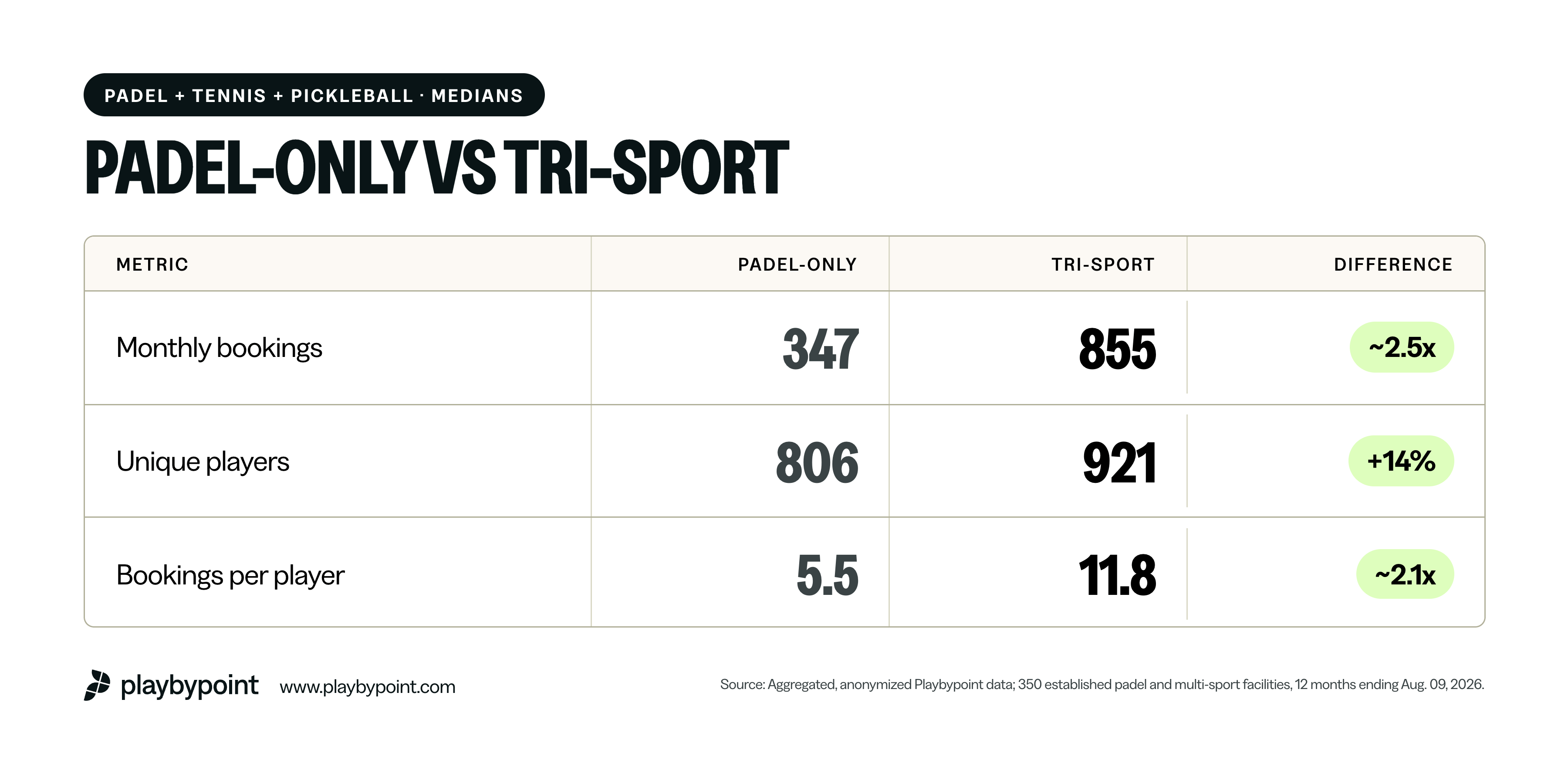
For clubs running padel, tennis, and pickleball together, the median club logged about two and a half times the monthly bookings of a padel-only venue, and its players came back more than twice as often. Breadth of sport turns straight into depth of engagement.
What the Data Doesn’t Say
Yes, those numbers are pretty stunning. But, for clarity’s sake, Jo is also careful to add:
What's interesting is where the advantage doesn't come from. It's not that multi-sport clubs squeeze more out of each court. It's that they pull in more players, and those players play more often. The story is broader demand and deeper engagement, not tighter utilization. That's a healthier flywheel for a club to build on.
Alex Luscher, who serves as director of operations at Ballers, obviously agrees with this sentiment, telling me:
Multi- means more! More sports, more players, and more opportunities to socialize. Padel might just be your new favorite sport you've never heard of, it might be the perfect compliment to your golf sessions, and you might've found Ballers by searching for the best smash burger in town. Offering so many activities within one club is the special ingredient that allows our community to flourish.
Jess Nicol, co-founder and CEO of Nicol Sports, dives even deeper into this concept, telling me in a recent email exchange:
What we’ve found at Nicol is that the different sports really do serve different people, and that’s what makes the multi-sport model so interesting.
Squash is strong for juniors — they can get on court, hit the ball as hard as they want and just let it rip, but there’s also a very real pathway through high school and into college squash.
Padel is becoming a really exciting option for junior tennis players who can see where the sport is going and where the opportunities might be, particularly compared with how saturated tennis has become.
And for adults, padel is both fun and competitive. A lot of people who have played tennis or pickleball for years are ready for something new, and once they try it, they tend to get hooked pretty quickly. Both Peter and I come from squash and now almost exclusively play padel (the addiction is real).
We want people to have a reason to keep coming back, to improve, compete, meet people and feel like they’re part of something that improves their lives. Offering different sports under one roof helps achieve that goal.
(However, she also points out that while pickleball is a fantastic sport for certain segments of the population, future Nicol clubs will not have it and instead just focus on padel and squash.)
The Best Path Forward?
While many people are happy to argue whether tennis or padel or pickleball or squash is the better — or best — sport, Jo (and the entire team at Playbypoint) clearly take a much more pragmatic approach to the debate, with her ultimately concluding our conversation by telling me this…
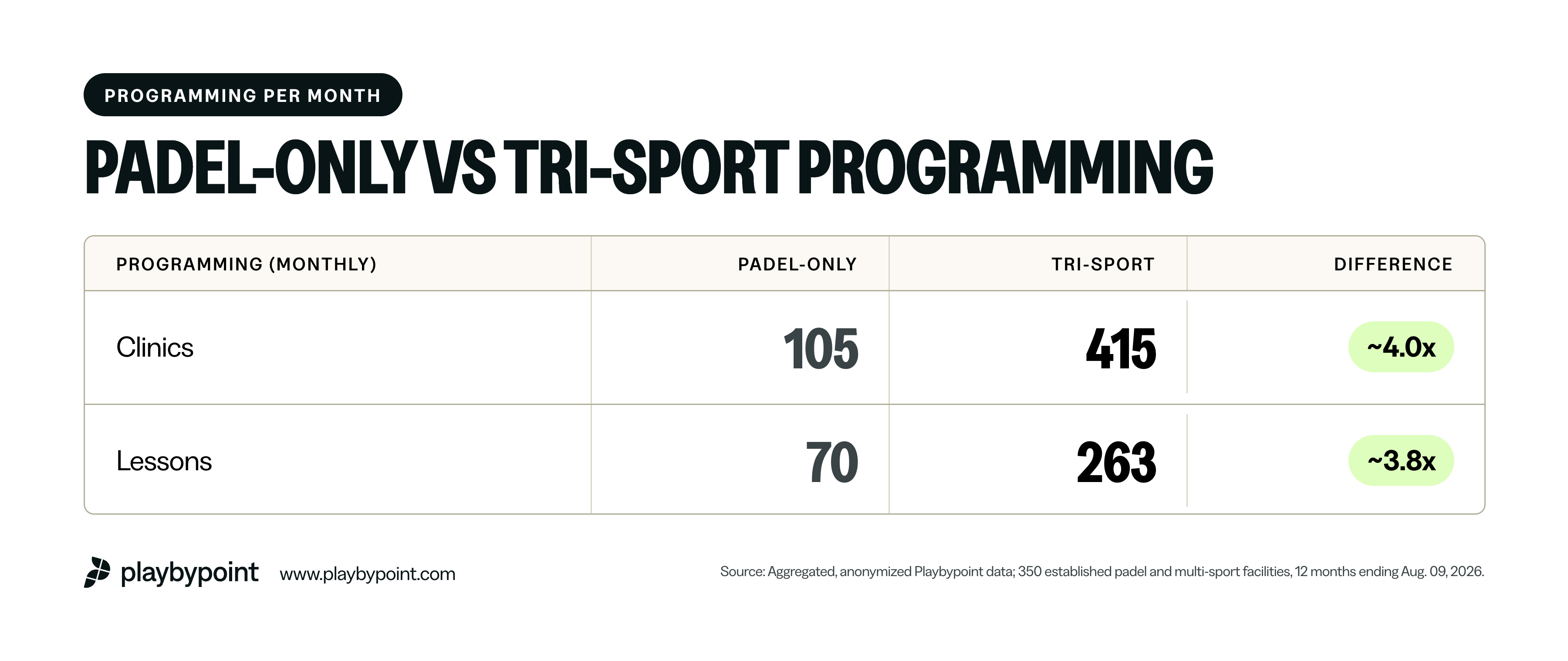
Programming is the real engine, and multi-sport clubs simply have more to program. More clinics, more lessons, more leagues across more skill levels and more sports. On our platform, established multi-sport clubs ran nearly four times the clinics of padel-only clubs. That's what turns a court into a calendar, and a calendar into a community.
… and showing me this:
Let the Debate Begin Continue
After hearing everything I do day in and day out from U.S. club operators, owners, and consultants, do I think padel is doomed in the U.S.? Absolutely not — far from it, in fact!
But at the same time, I also don’t think it’s going to end up being the easy, get-rich-quick scheme that many people were led to believe it would be.
The majority of club founders I know are pouring an incredible amount of blood, sweat, and tears into just getting their doors open, let alone their courts filled.
At the end of the day, we’re still very early in this game…
And I think that the U.S. padel pioneers who have the brains (and guts) to stay the course and play the long game will ultimately be rewarded as the sport continues to meaningfully grow across the U.S. — especially if they can find ways to capitalize on the trends that this stunning data from Playbypoint brings to light.
If you enjoyed this article, please be sure to subscribe to Padel Nation (for free!) to get exciting updates and important insights on the rapidly emerging U.S. padel scene like this one delivered directly to your inbox 2X weekly — or share it with a padel-playing friend.
Finally, as always, a big thank you to the friends and preferred partners of Padel Nation who help make posts like this possible, including:


Interested in becoming a friend or preferred partner of Padel Nation? Drop us a line here and let’s talk!
Oh, and one other thing… my brand-new 352-page padel book was just released last month. So, if you enjoy the work I’m doing in the U.S. padel space, you can support me by ordering a copy (or two!) online at Amazon or Barnes & Noble.
Or if you’re a club owner and you’d want to carry a handful of copies in your pro shop for “padel curious” people who are interested in trying the sport out but don’t know quite where to start, let me know and I can connect you with my publisher’s wholesale department.
Many thanks in advance!