


Editor’s note: The following (lightly edited) feature article is from regular guest contributor, Scott Matulis, a former PR Director for the Worldwide Senior Tennis Tour who discovered padel in Vegas two years ago and can now hit balls off of the glass occasionally. He is the author of the LinkedIn and Substack serial novel The Applicant.
Of course, some might argue that padel has already taken “center stage” in the U.S. with events like the recent Premier Padel P1 event in Miami. But for the sport to really grow here in the States like it has in Europe and South America, I’d argue we need to find ways to expose tens of thousands more people to the magic of the sport (in addition to just hosting big events catering to those who already love it).
Which is exactly what happened in the California desert at Coachella this past month and why I’m more than happy to publish Scott’s account of how this event unfolded and helped padel move closer than ever to center stage culturally in the U.S.
We all know that padel has exploded internationally and that, as a result, operators in the U.S. believe it can be just as popular here as it is in Spain, where it’s the second-most popular participation sport behind soccer.
The feeling is that it can, with the right type of promotion, expand beyond private clubs and racket-sport diehards to take a place in lifestyle, entertainment, and popular culture.
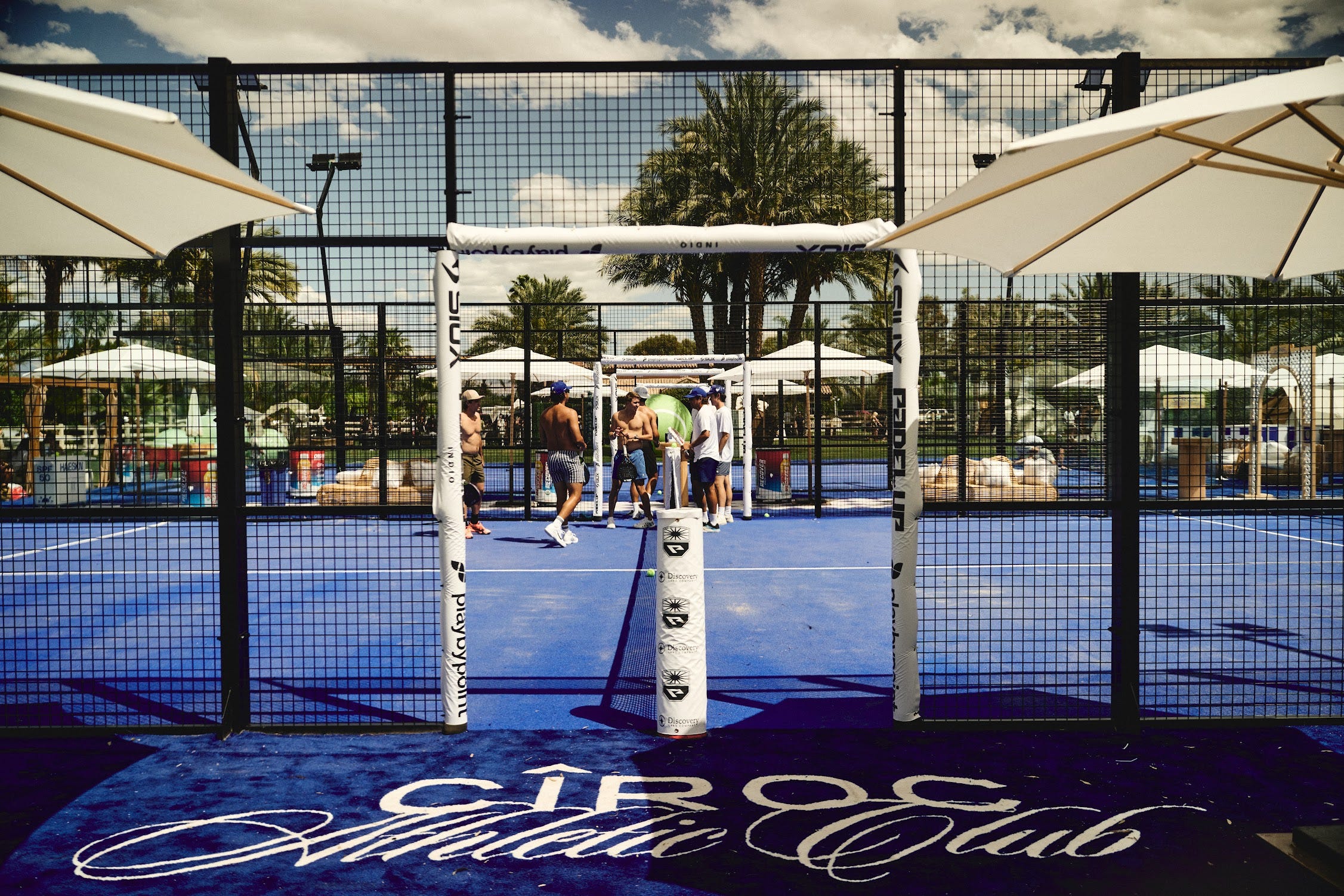
Which is why it’s so notable that for two weekends this past April, amid the usual Coachella festival mix of music, celebrities, cocktails, pop-up brand lounges, and people dressed to kill, two blue padel courts appeared in the desert.
Getting Splashy
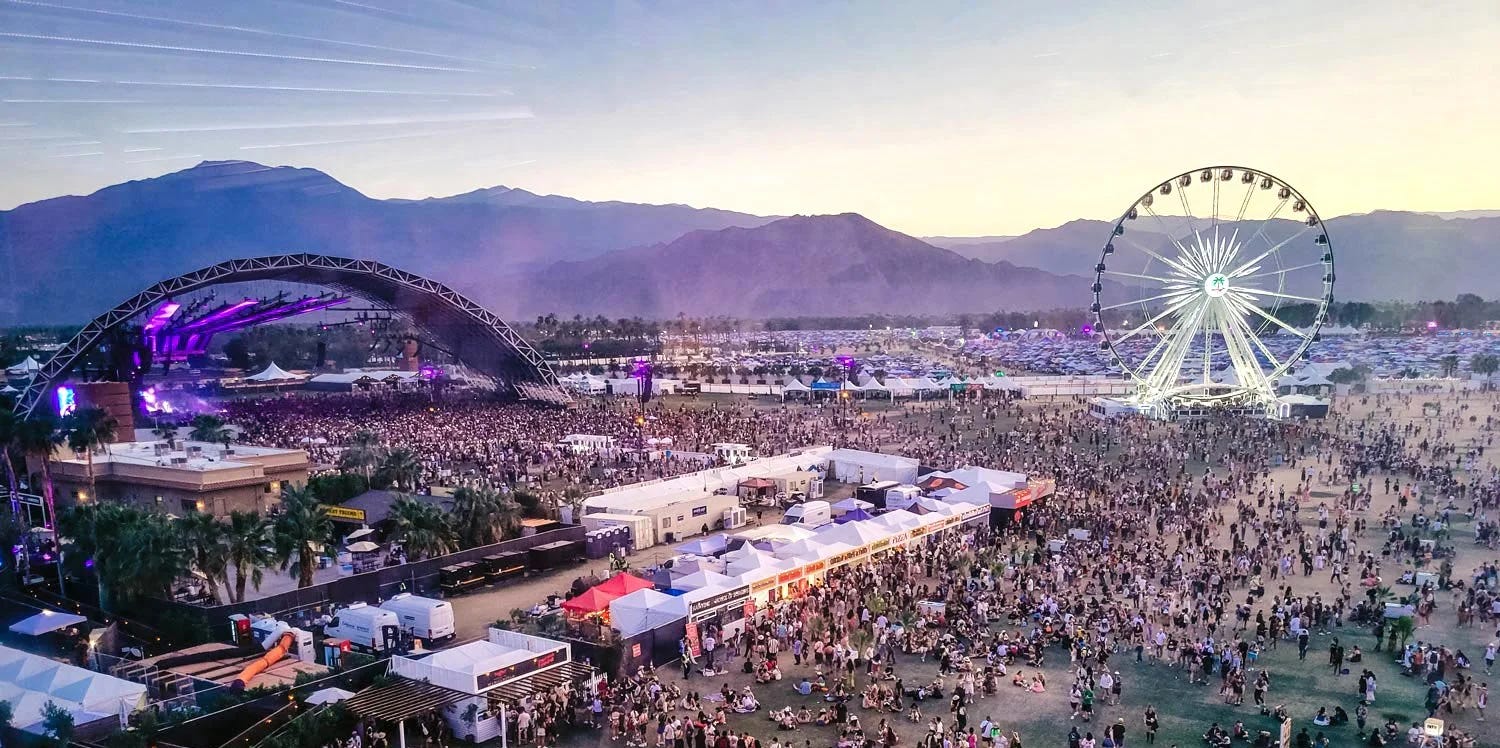
If you’ve ever been to Coachella, then you know that the festival is so much more than a series of concerts. It delivers a yearly discovery platform for fashion, food, brands, celebrities, experiences and most of all what comes next. All the cool kids go.
Which is why Padel Up, a leading Los Angeles club operator, along with a top-flight roster of sponsors led by club management platform Playbypoint and padel equipment brand SIUX, conjured two padel courts out of the dust in Indio. They put them strategically adjacent to the festival grounds at the Mirabella Estate as part of CÎROC Vodka’s CÎROC Athletic Club, giving festival-goers the opportunity to check padel out up close, hit a few balls, and feel the vibe. Many did.
According to Padel Up co-founder Peter Worton:
“The Coachella activation had been part of our thinking for some time. People who attend the festival are open to new experiences, and that’s a demo we need to capture to grow the sport in the U.S. So when the opportunity presented itself, we moved quickly. The goal was to introduce padel to a new audience in a high-impact way. We wanted to make a splash.”


Worton’s co-founder and Padel Up CEO Andre Brown added:
“Padel has a way of hooking people the second they step on the court, and there are millions who just haven’t had that experience yet. Bringing padel to the desert during one of the biggest cultural moments of the year is exactly the kind of bold move this sport needs. We wanted people to walk off the festival grounds, pick up a racket for the first time, and understand why the rest of the world is already obsessed.”
Staying Serious
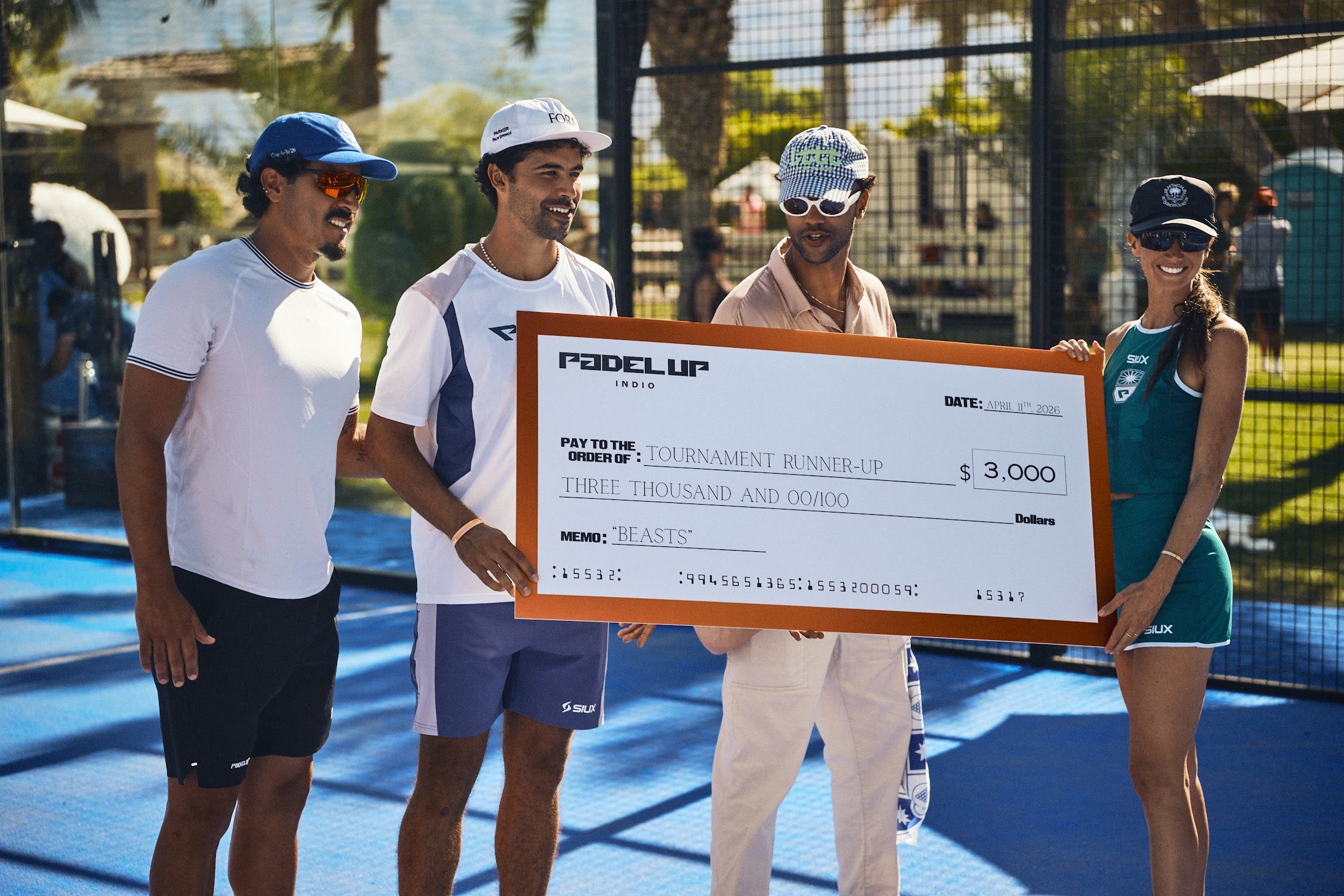
Padel Up Indio launched with a 12-team Pro-Am tournament on April 11 and continued full bore through April 26. The Pro-Am, focused on highlighting female athletes who are crucial to padel’s growth, anchored the rest of the event’s padel programming and created energy that drew people in from other activations across the property.
It also showed that padel was a serious sport. It featured male pros paired with top female amateurs competing for $11,000 in prize money. The winning team of Valentin Mussi, a former college tennis player from Argentina, and Paige Cline, who played at the University of South Carolina, earned $6,000 for the win.
“The pro am was my first real experience in the world of padel and I get why the sport has so much momentum,” Cline explained. “The venue was perfect, the competition was high level and drew an amazing crowd. Padel Up created the perfect event.”
Curating Culture (to Build Awareness)
In addition to watching the pros, playing some padel, and hobnobbing with festival celebs who were also playing — or considering playing — guests also got to hang out in a premium hospitality lounge, sip custom-crafted CÎROC cocktails and shop limited-edition CÎROC Athletic Club merchandise. An assortment of DJs, including Louis the Child, Jonas Blue, Arlo and Juicy J, performed on-site, enhancing the padel courts’ “next-new-thing” vibe.
Playbypoint powered the entire activation, handling player bookings, scheduling matches, player ratings, and on-site operations. The activation also served as the launch pad for Playbypoint’s new player-matching feature, Game Match, which enables padel players of all levels to find a game or join a group.
Jo Vos, the CMO at Playbypoint, explained:
“This activation wasn’t just about putting padel courts next to a music festival. It’s about proving that padel belongs in the mainstream cultural conversation.
The clubs winning right now aren’t necessarily the ones with the most courts, they’re the ones building real communities and creating experiences that bring players back, and that’s what Playbypoint is built for.
We wanted anyone who picked up a racquet in the desert to walk away connected to a game they can keep playing at home.”
Jad Elam, Director of U.S. Sales and Marketing for SIUX, echoed this sentiment, telling me:
“At SIUX, we’re always looking for the most exciting and unexpected ways to connect with players and introduce padel to new audiences. Activations like what we built in Indio are more than marketing moments for us, they’re investments in the growth of the sport and in the future of the U.S. padel community.
We’re focused on pushing the industry forward in new ways, doubling down on the American market, and creating the kinds of experiences that make people want to be part of padel. If we can help grow the sport while becoming one of the most relevant and aspirational brands in the space, that’s exactly where we want to be.”
And that’s the real lesson from the two blue, carpeted courts in Indio. Padel in the U.S. is still new enough that most people need to experience it before they understand it, and see it live before they fall in love with it.
Putting courts next to one of the country’s biggest cultural events was not just clever marketing. It was a statement: padel does not have to wait for Americans to discover it at a club or see highlights on YouTube. It can go where the culture already is. And fit right in.
Enjoy this article? If so, please be sure to subscribe to Padel Nation (for free!) to get exciting updates and important insights on the rapidly emerging U.S. padel scene like this one delivered directly to your inbox 2X weekly — or share it with a padel-playing friend.
Finally, as always, a big thank you to the friends and preferred partners of Padel Nation who help make posts like this possible, including:


Interested in becoming a friend or preferred partner of Padel Nation? Drop us a line here and let’s talk!
Oh, and one other thing… I’ve actually got a full-blown padel book coming out in July. So, if you enjoy the work I’m doing in the U.S. padel space, you can support me by pre-ordering a copy (or two!) online at Amazon or Barnes & Noble. Many thanks in advance.