



Editor’s note: The following post is from guest author Hans Helmers, a racquet-sports investor and enthusiast with a background in marketing and management. He is also a partner at InvestTrek Capital, which is helping grow padel in the U.S. through investments in clubs and platforms including Padel Haus, Ballers, Bay Padel, and Padel39.
By any measure, padel is growing in the United States.
Clubs are being built, people are watching highlights, padel searches are increasing, and tournaments and leagues are steadily expanding. Padel conversations are taking place at tennis, squash, and platform-tennis courts every day.
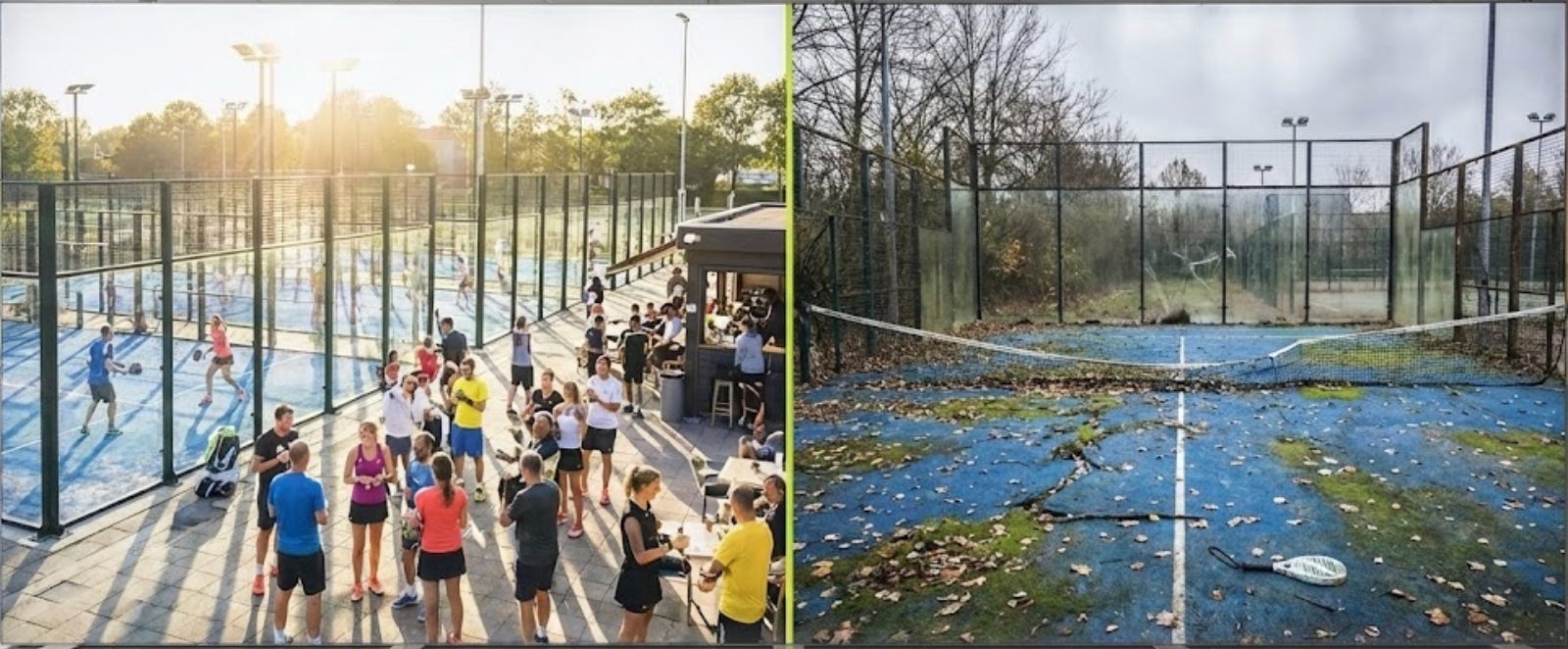
The truth is we have to push even harder to elevate American padel interest in order to fill our courts (particularly in off-peak hours). In parallel, we have to build more courts in more places in order to generate play and grow interest.
The Scope of U.S. Padel
Let’s set some context for the size of padel in the U.S.
According to Patricio Misitrano’s well-researched The State of Padel in the U.S. report, there were 688 padel courts in the US in Q2 2025, and over 900 courts in the U.S. in his year-end update.
In terms of players, the Q2 report stated that 39,500 people played padel twelve or more times in the U.S. in the prior year. More than 100,000 people played at least once.
It is still very early in U.S. padel. As a frame of reference, there are over 75,000 pickleball courts and 270,000 tennis courts in America. In Spain, where padel has been growing for decades, there are more than 17,000 padel courts, the most of any country in the world. American padel growth is taking time for well-documented reasons from zoning and permitting, to availability of land, or indoor facilities in optimal locations.
Florida, Texas, and California have over 60% of U.S. padel courts. Within those states, most of the courts are in a handful of counties.

On the other side of the coin, in the shadow of New York City, Westchester County is home to 1,000,000 people with no padel courts available to the public at this time.
Land is relatively scarce, and real estate prices are commensurately higher. There is great interest in padel among the large racquet sports community in this area, and the demand has not been met.
Padel Growth
People looking to play padel, and those involved in the business, would love to see padel grow faster in the U.S. It has become immensely popular in several European and South American countries, because it is so much fun to play and provides great exercise, competition, and social interaction. With a shallow learning curve and small court, padel is accessible for players of all ages and skill levels.
The two key growth ingredients are players and courts, but which comes first? You can generate interest without people playing (via social media, YouTube, or word of mouth), but ultimately padel needs more players in order to take off in America. You can’t have more players without more courts in different areas of the country.
This challenge is circular:
Padel needs more courts in order to have more players — but it also needs more players to support the courts that already exist.
As noted in my previous guest article for Padel Nation, 2025 was a big year for U.S. padel because the 400 new courts were nicely distributed in several regions that are new to padel. That is an important step.
Those clubs will need to build awareness through marketing, creating communities, and high-touch execution at the club level. In a best case scenario, interest and play grow as courts are built.
Growth Accelerators
Awareness:
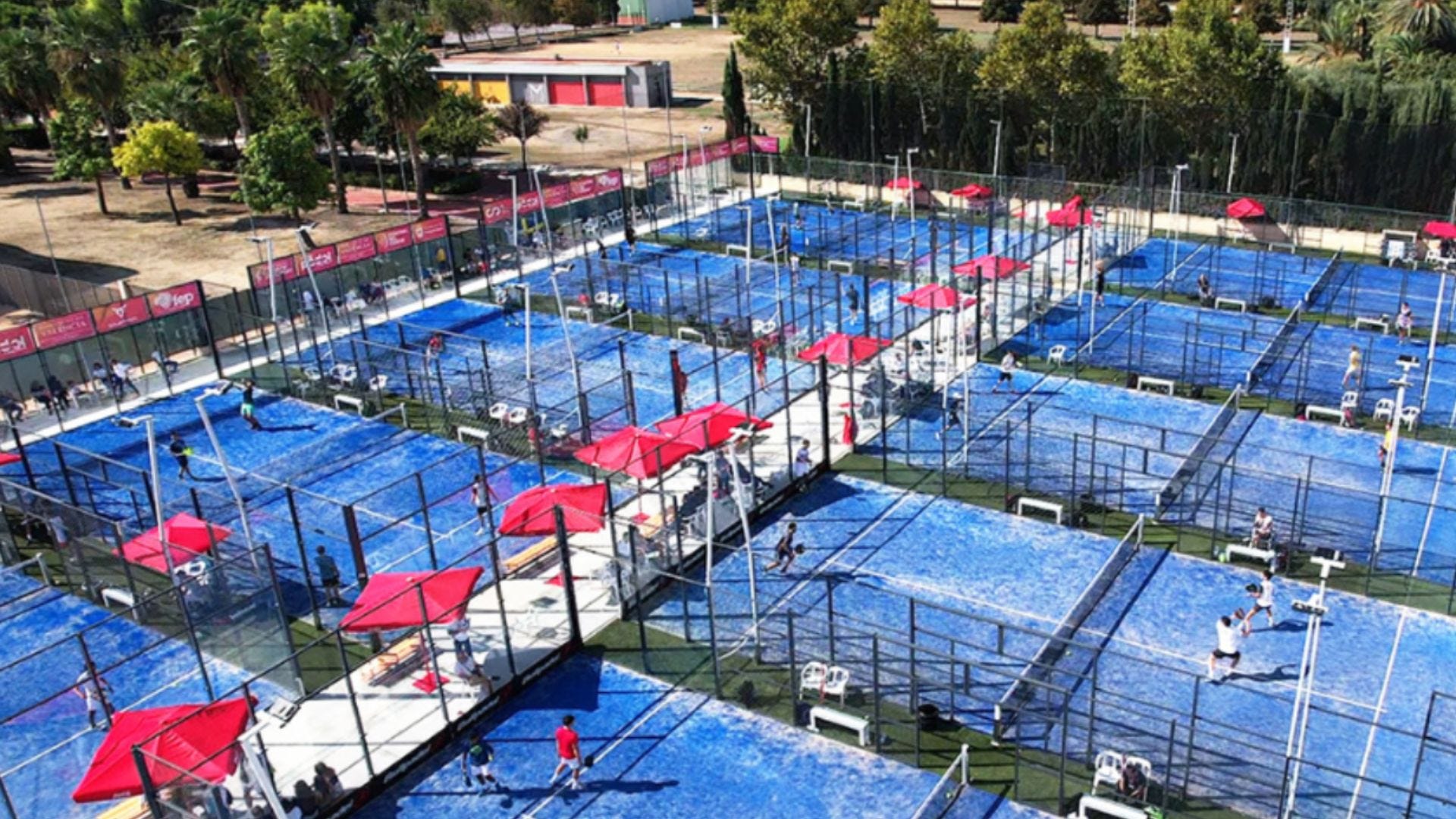
U.S. padel would benefit from a centralized padel awareness campaign. This could be driven by the USPA, or by several major clubs and industry groups who come together to make this happen. This could include well coordinated activations, engagements, social media campaigns, influencers, and celebrities.
Reserve, Padel Haus, RacquetX, and others have done a lot for padel awareness in a variety of ways. We also have great publicity within our padel ecosystem — but we haven’t yet had a big industry-wide push that reaches outside the padel establishment.
The British Lawn Tennis Association (LTA) took an interest in padel, and played a role in growing padel’s large and fast-growing popularity in the UK. The United States Tennis Association (USTA) has capital and resources, and could help grow padel in the U.S., but the USTA is focused on tennis, not padel (or pickle).
Capital:
It takes capital to build clubs and generate awareness and participation. Hundreds of padel entrepreneurs are raising capital at this moment. Capital can be driven by excitement and enthusiasm, which has benefited pickleball in the past five years.
Capital is also driven by results. Some investors don’t want to be first, some want to see solid early performance or steady growth, and some require a certain scale. The performance of the first wave of U.S. padel clubs will play a role in the pace of padel growth.
Supply and Demand
There is greater demand than supply in several areas, like the aforementioned Westchester County, but padel demand is nuanced.
It is currently driven by racquet sports players (tennis, squash, platform-tennis) who come from, or have traveled to places where padel is popular.
If a city doesn’t have a significant number of people who have been exposed to padel, new clubs may want to focus on tennis and squash players who are used to paying for membership and court time.
The Players
American padel has initially launched in more affluent “global-citizen” communities like Miami, Houston, L.A., New York, and Boston, because padel awareness is the first hurdle to success. The lease cost for club owners necessitates higher court prices. This requires players with higher income, and that is where padel awareness and interest has been in the U.S.
As you might expect, high-end media outlets have covered padel, and padel awareness has spread faster among affluent and coastal populations.
This will evolve as more clubs are built in lower cost regions. Club competition will also help moderate court prices, which enables more people to play.
Padel will reach the masses when it is more affordable and closer to where more people live.
Who Is Building Padel Courts?
The largest number of new padel courts over the next few years will come from new padel clubs and padel + pickleball clubs being built across the country.
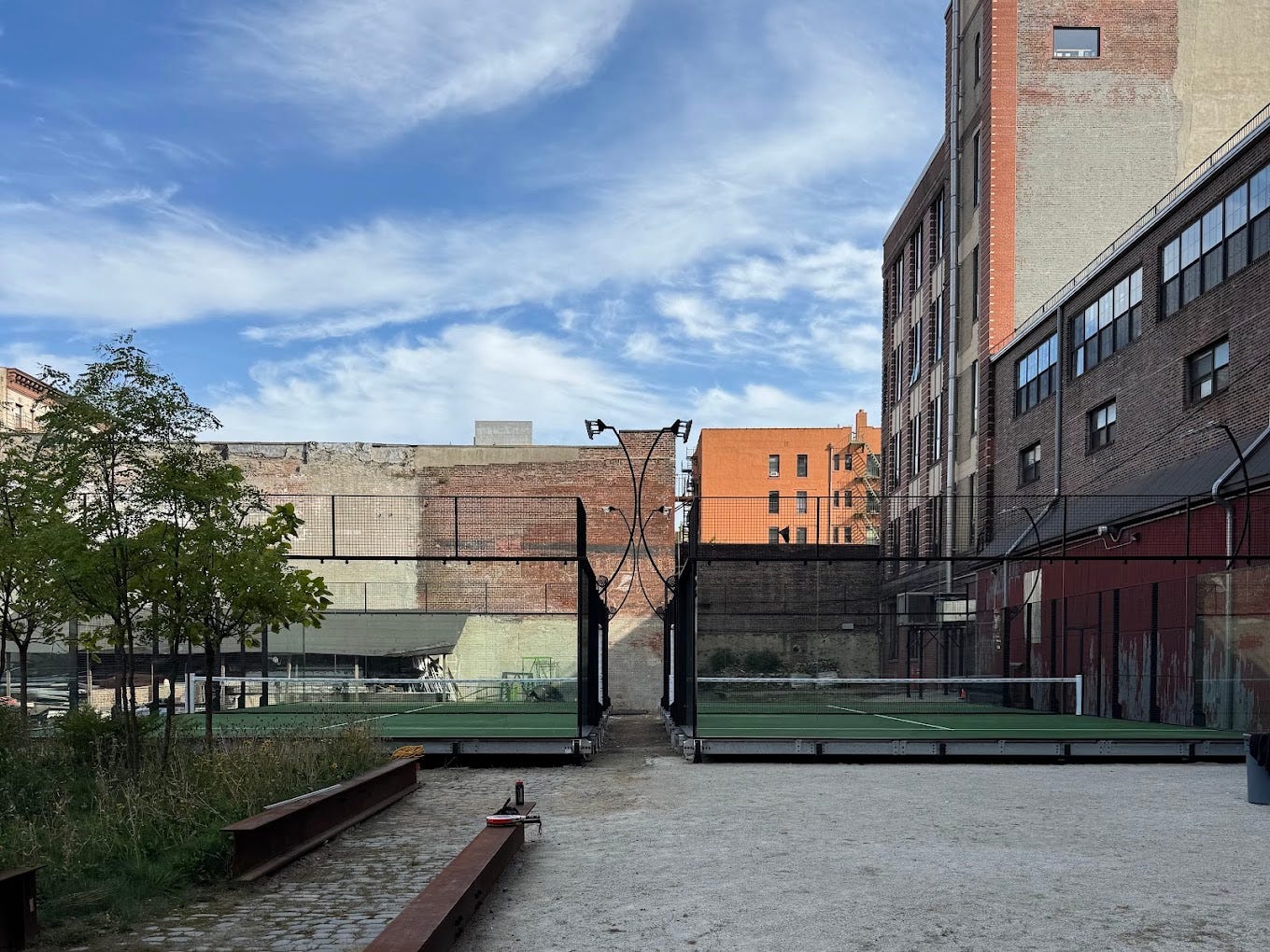
Tennis clubs, country clubs, and resorts will start to build courts over the next two years. Real estate developers are looking toward padel as a corporate or residential amenity. One example is 111 W. 57th Street in New York, which built a padel court in its high rise to attract international buyers of ultra-luxury apartments. Public courts will be slower to come in America given the cost of courts relative to near-term interest.
Where Are Padel Courts Being Built?
Sunbelt regions that already have the most padel courts are leading the way in expansion because they have awareness and players. They also have climates that are conducive to lower cost outdoor courts with no ceiling height constraints, and potentially more land availability.


New clubs have opened, and more are on their way in large cities like New York, Boston, and Chicago, and high growth cities like Atlanta, Denver, Nashville, and Austin. Excitingly, new clubs dotted the map all over the U.S. in 2025.
Proximity Matters
As much as people love to play padel, they are not likely to travel long distances on an ongoing basis to do so. Primary players will come from within a 15-minute commute, secondary players from 15 - 25 minutes away, and a third tier of players will travel 25+ minutes to play. The frequency of play may be dictated by convenience, with the exception of a far superior experience offered by a given club.
The Tipping Point
Padel is growing steadily, and it will continue to do so. Leaders have emerged who are building clubs across the country, hosting tournaments and leagues, developing meaningful partnerships, and growing awareness and participation.
Padel Haus, Reserve, Bay Padel, Taktika, Padel39, Ultra, and Racquet 360 are some of the early pioneers of American padel. Dozens of other trail-blazing entrepreneurs are also building clubs, and they have generally been able to raise the capital to do so.
Padel will succeed in the U.S — but when will it reach its tipping point and really explode?
We may still be a few years away based on the speed of growth to date. Steady growth will be good for padel in the long run, because it enables a thoughtful, well-planned approach and creates a stable padel market.
After voting in our poll above, please be sure to subscribe to Padel Nation to get exciting updates and important insights on the rapidly emerging U.S. padel scene delivered directly to your inbox — or share it with a padel-playing friend.
Finally, as always, a big thank you to the friends and preferred partners of Padel Nation who help make posts like this possible, including:


Interested in becoming a friend or preferred partner of Padel Nation? Drop me a line here and let’s talk!
As a relatively brand-new enthusiast who has only been playing the sport for a little over six months, I’ve already observed and felt the marked differences between padel in the U.S. versus other parts of the world (in my case, Europe and SE Asia).
Just got back from the Milan Cortina Olympics and managed to play at seven different clubs and the ecosystem was so different compared to CONUS and SE Asia.
We may very well be at an inflection point for padel stateside but I think successful adoption in the next wave will require rethinking some of the playbook we’ve working with over the last, call it 6-8 years…
Great article, Hans — and I’m really loving this thread. I agree with the “circular challenge,” and David + Aris points really resonate.
One angle I’d add from my padel experiences over the last year: padel in the US won’t scale with a copy/paste club model. I say that as someone who first found padel in Cape Town as a curious newcomer (no racquet sports background), and has since visited 15+ clubs across the US.
Pop-up courts can definitely help with awareness and supply. But the biggest value is “proof of demand” and listening. Not just “how many people showed up once,” but:
• who shows up, and when
• who they come with
• what they’re looking for from a real third space
• what would make them come back every week
Coffee culture? Remote-work breaks? After-school parent hours? Weekend social crews?
Then the permanent club has to match that local rhythm and feel like it belongs in the neighborhood. I’ve seen the luxury version done well (Padel N9NE in San Diego). I’ve also walked into beautiful facilities that feel oddly empty off-peak. One of my favorite hidden gem examples is Padel Plant in Richmond, VA — it’s the kind of place you’d hang out on a Friday evening even if you weren’t playing.
If we build padel in the US around “weekly habit + third space,” density becomes a byproduct instead of a constant battle.
Would love to meet and connect further with you all.