



If you pay any attention at all to the U.S. padel landscape, then you’ve probably heard plenty about the fact that:
Miami has a padel “obsession” (as The New York Times puts it)…
Burgeoning padel empires like Bay Padel, Ballers, and Padel Haus are bringing courts and clubs to cities like Atlanta, Boston, Brooklyn, Chicago, Dallas, Denver, Los Angeles, Marina del Rey, Nashville, Philadelphia, San Jose, San Francisco, and Silicon Valley, among other places…
The Pacific Northwest is finally getting in on the action with padel clubs opening soon in Boise, Bend, Kirkland, Portland, and Seattle…
Privé Padel just opened the 1,000th court in the U.S. at the THesis Hotel Miami in Coral Gables, Florida, and…
Even Salt Lake City is starting to experience an all-out padel avalanche.
But what you’re likely hearing much less about is all the courts that are popping up across the U.S. at private country, city, and racquet clubs.
In fact, just last week we officially got word that new courts have either opened or are about to at John Newcombe Country Club in New Braunfels, Texas and Fort Wayne Country Club in Indiana (whose new court is being built by our friends at Off the Glass).


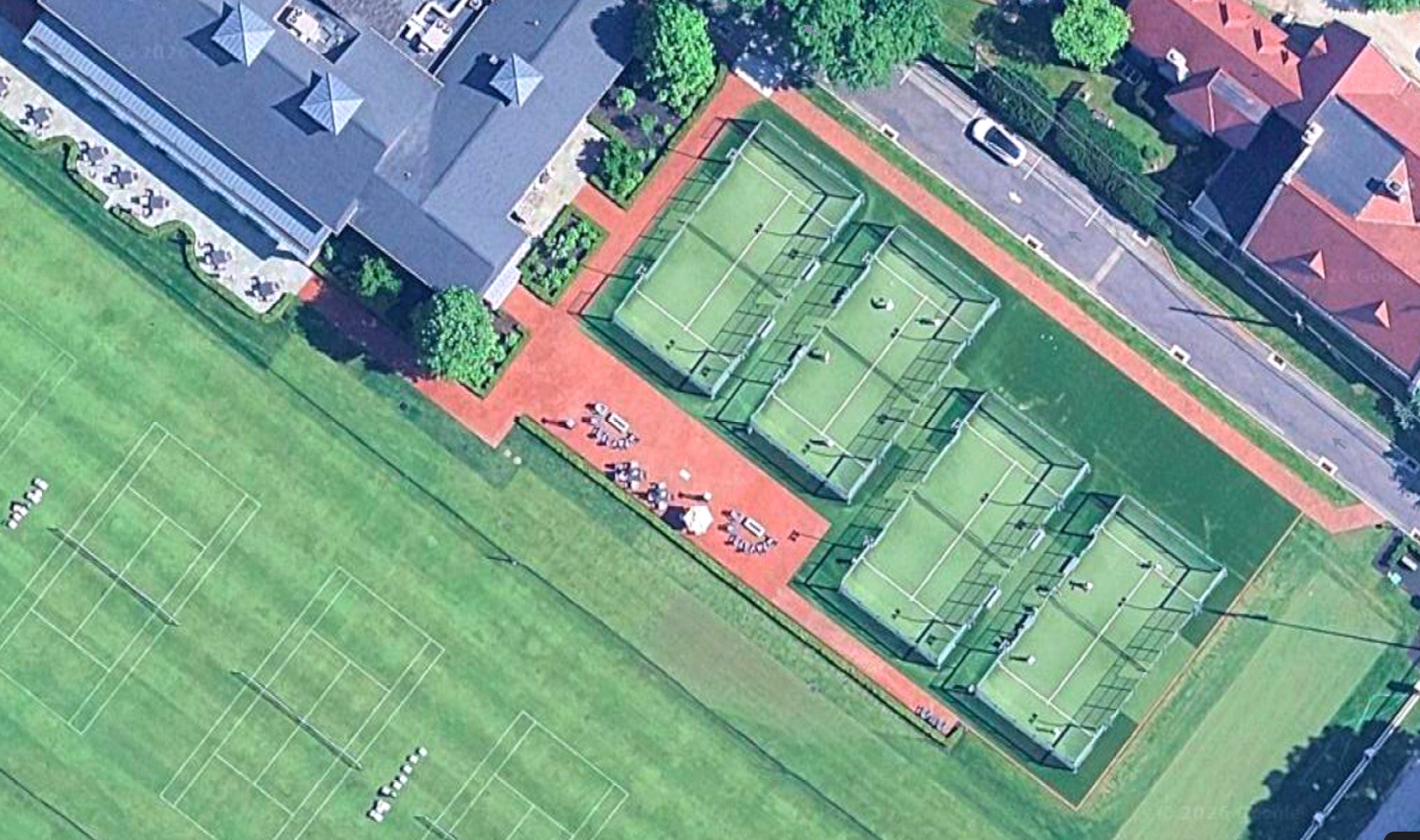
Meanwhile, clubs with legendary racquets programs like The Piedmont Driving Club in Atlanta, The Tuxedo Club in Tuxedo Park, New York, and The Philadelphia Cricket Club and Merion Cricket Club outside Philly have all added padel courts in recent years — which, from what I’ve heard, are constantly packed.
To this list you can also add other one-court private clubs, including:
The Saddle & Cycle Club in Chicago…
Paradise Valley Country Club in Scottsdale, Arizona…
La Valle Coastal Club in Rancho Santa Fe, California…
The Greencroft Club in Charlottesville, Virginia…
The Edgewood Country Club in Charleston, West Virginia…
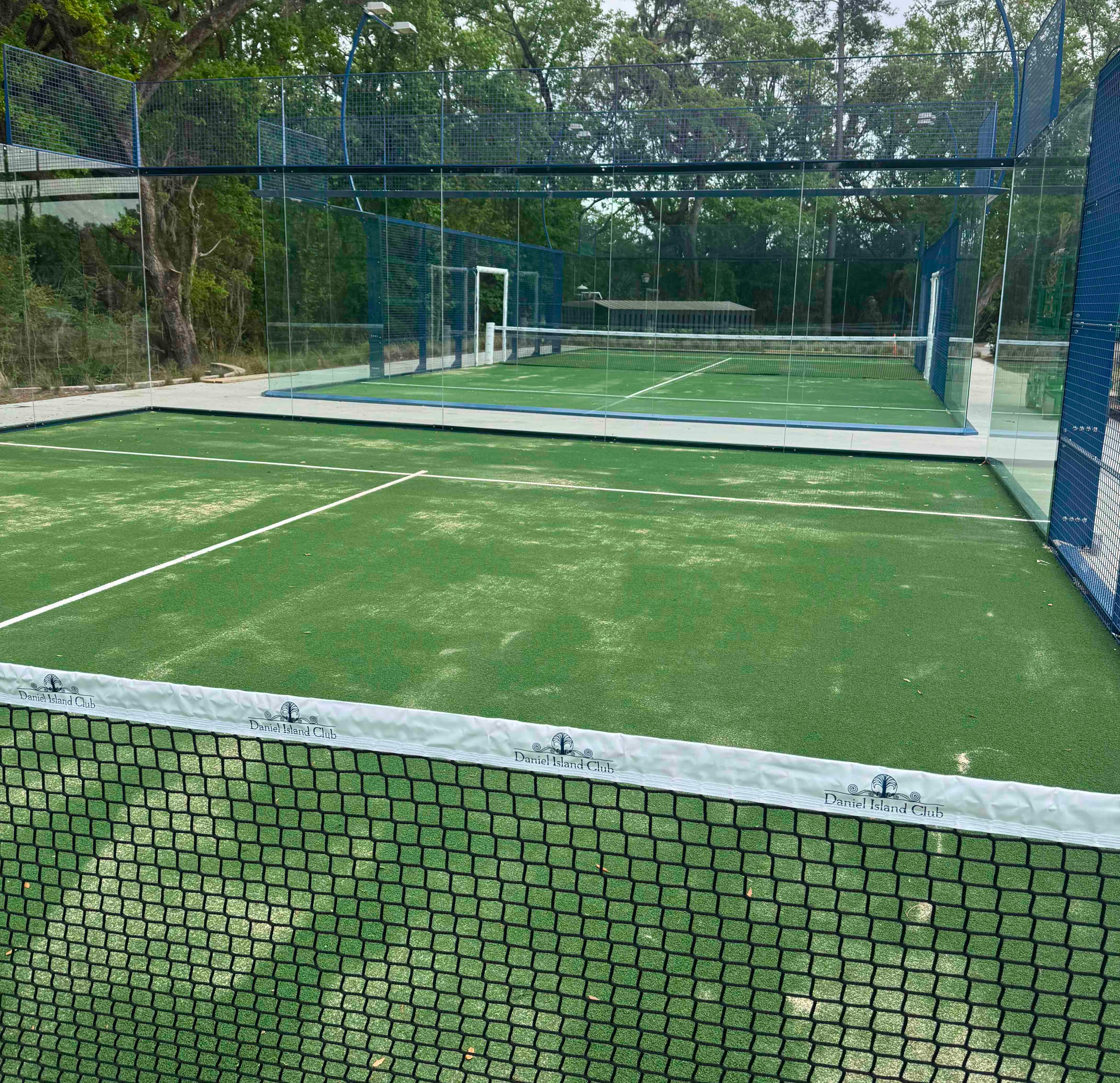
Speaking of which, here in the Charleston, South Carolina, the private Daniel Island Club is getting ready to open two new padel courts in the coming days after nearby Kiawah Island Resort added two last year.
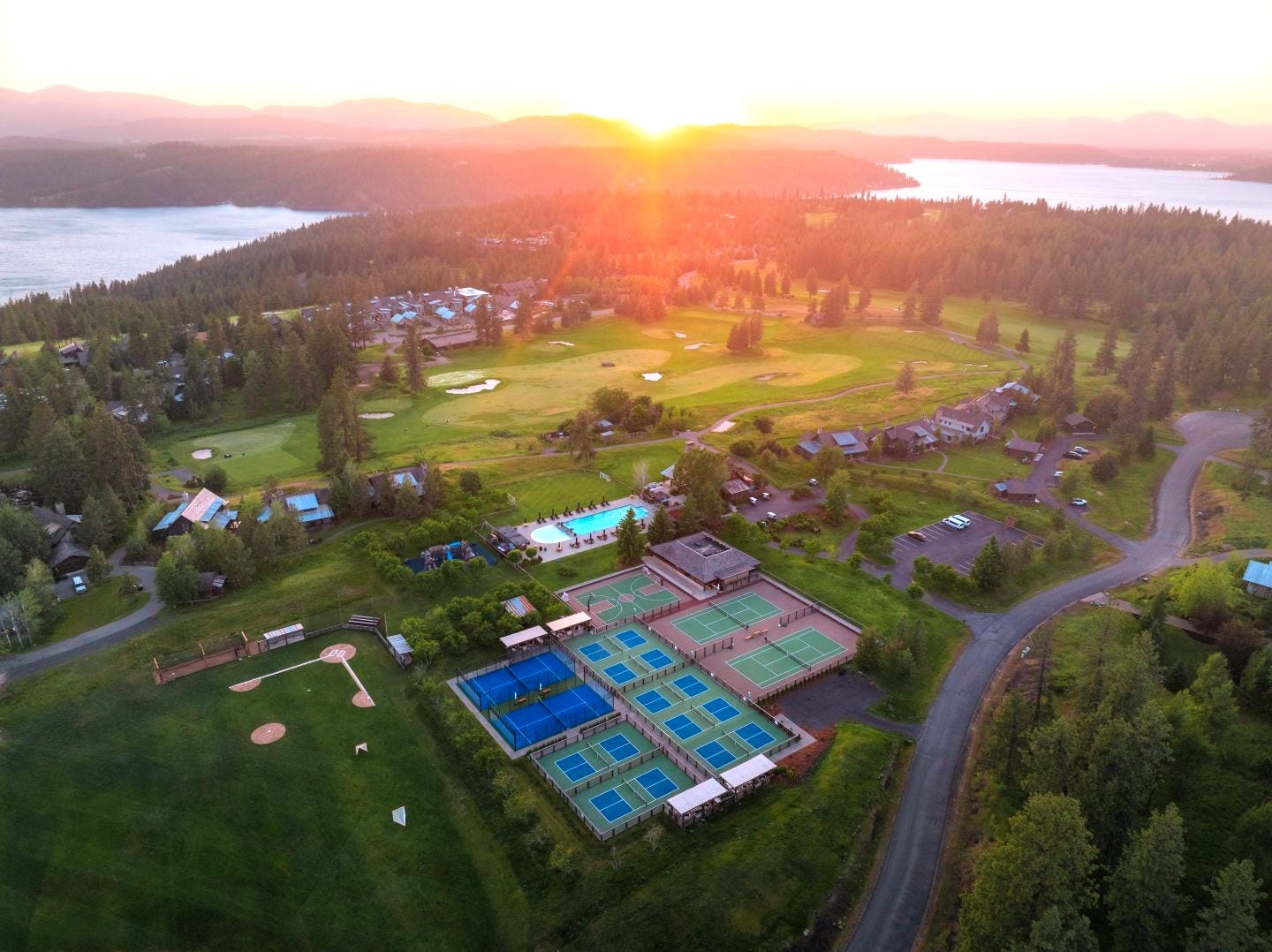
Other private clubs that feature multiple courts include:
The Yellowstone Club in Big Sky, Montana…
The Snowmass Club in Snowmass, Colorado…
The Gozzer Ranch Club just outside Coeur d'Alene, Idaho…
The Boulevard Tennis and Padel Club in Vero Beach, Florida…
SH19 at The Stovall House in Tampa, Florida…
The Cliffs at Mountain Park in Marietta, South Carolina, and…
The North Hills Club in Raleigh, North Carolina…
… just to name a few.
What’s more, some of the longest-standing courts in the U.S. are at private clubs like The Traditions Club in Bryan, Texas, and The Greens Country Club in Oklahoma City (which is hosting a USPA 100-level tournament next week).
Is This Good for the Sport?
I’d say yes — and potentially also no…
On the one hand, most private clubs in the U.S. are notoriously competitive. So, with dozen of private clubs across the U.S. starting to add padel courts, it’s a fairly safe bet that dozens more will soon likely start feeling like they have no choice but to also add courts — which will undoubtedly grow the awareness and visibility of the sport around the country, not to mention, the total court count.
However, on the flip side, this doesn’t exactly help quell the growing perception that — similar to what many people think about squash — padel is an elitist, white-collar sport that’s generally only available to the small handful of Americans who can actually afford to play it.
It could also very well negatively affect all of the publicly accessible padel clubs that are opening around the country. After all, many private clubs charge a five- or even six-figure initiation fee to join, plus hefty monthly or annual dues on top of that.
So, if you’re already shelling out a small fortune for your family to be members of an elite country club that offers padel courts, how likely are you to also play regularly at a public padel that club that charges hundreds of dollars per month for memberships plus hundreds of dollars per hour for courts?
My guess is not very likely.
What’s more, if I had to guess what percentage of members at an elite-level padel club like, say, Padel United Sports Club in Cresskill, New Jersey, are also members of elite-level country clubs in the surrounding area, I’d wager it’s pretty high.
So, what will happen to PUSC’s membership base if and when those country clubs start adding padel courts?
I suppose only time will tell.
However, as frequent Padel Nation guest author, Hans Helmers, pointed out to me recently, practically every single padel court at a U.S. country club is currently outdoors, and it’s unlikely very many will ever be built indoors…
Which, of course, gives indoor clubs (like Padel United Sports Club) a major advantage — and selling-point — when it’s raining or winter hits.
So, maybe it’ll wind up being a net positive for these clubs after all.
Enjoy this post? If so, please consider subscribing to Padel Nation (for free!) to get exciting updates and important insights on the rapidly emerging U.S. padel scene like this one delivered directly to your inbox 2x weekly — or share it with a padel-playing friend.
Finally, as always, a big thank you to the friends and preferred partners of Padel Nation who help make posts like this possible, including:


Interested in becoming a friend or preferred partner of Padel Nation? Drop us a line here and let’s talk!
Oh, and one other thing… I’ve actually got a full-blown padel book coming out in July. So, if you enjoy the work I’m doing in the U.S. padel space, you can support me by pre-ordering a copy (or two!) online at Amazon or Barnes & Noble. Many thanks in advance!
Great stuff as always, my friend. Yeah similar (but independent) to Bill’s point, I envision padel becoming similar to tennis in the US. In other words, it will exist on a “spectrum” - i.e., exclusive country clubs, all the way to public courts in working class areas. That all said, I have no problem with country clubs including padel and furthermore, think they should keep doing so!
Maybe where I deviate a bit is the current scale and timing. What would bother me is country clubs building padel at a highly lopsided rate compared to padel clubs, pay-to-play padel facilities, and even free municipal courts. That’s when I feel like the sport would be truly “elitist.”
And furthermore, especially after bringing my racket with me through 3 continents, I still don’t buy into the “trickle down” theory. At this point, most of our entire planet has shown that this sport is fun - and necessary - and so the demand is already there across all markets and demographics. I mean heck, our friend Brevin buying 40 Blanca Padel racquets for folks in rural northern Indiana is just one of a plethora of examples. There are many ways to generate financial and community wellbeing simultaneously in this industry, and I truly believe that can be done at all ends of the spectrum RIGHT NOW.
Excellent article Austin and you are the first to write about the potential conundrum of country clubs adopting padel but at the same time that adoption putting pressure on other clubs and operators out there. Fortunately there are models/sports (golf and tennis come to mind) where both broad based access and country club prevalence co-exist. Having said that, it took over half a century for tennis and golf to become as accessible and widespread as we take for granted today. I continue to believe we are still at the very beginning of the padel journey in the USA and it is not always clear how or how fast the sport will be adopted across our very large and diverse population. Adoption rates and accessibility are unlikely to be the same across every region or metro area.