



According to a new report from Misitrano Consulting, the U.S. is now home to over 1,100 padel courts, which represents a fairly monstrous year-over-year growth rate of 62%.
Yet, as impressive as that is, we’d still need to see a growth rate roughly double that for each of the next few years to get anywhere the oft-cited, much-hyped “30,000 courts in the U.S. by 2030” predictions that so many people love to throw around — and frankly, I just don’t see that happening.
Don’t get me wrong… it’s not because I don’t think interest in — and awareness of — the sport isn’t exploding right now. Because it most definitely is.
In fact, while recently watching the U.S. Open tennis a few weeks back, I even saw a commercial that (very briefly) featured someone playing padel rather than pickleball. Talk about a huge (yet subtle) step in the right direction!
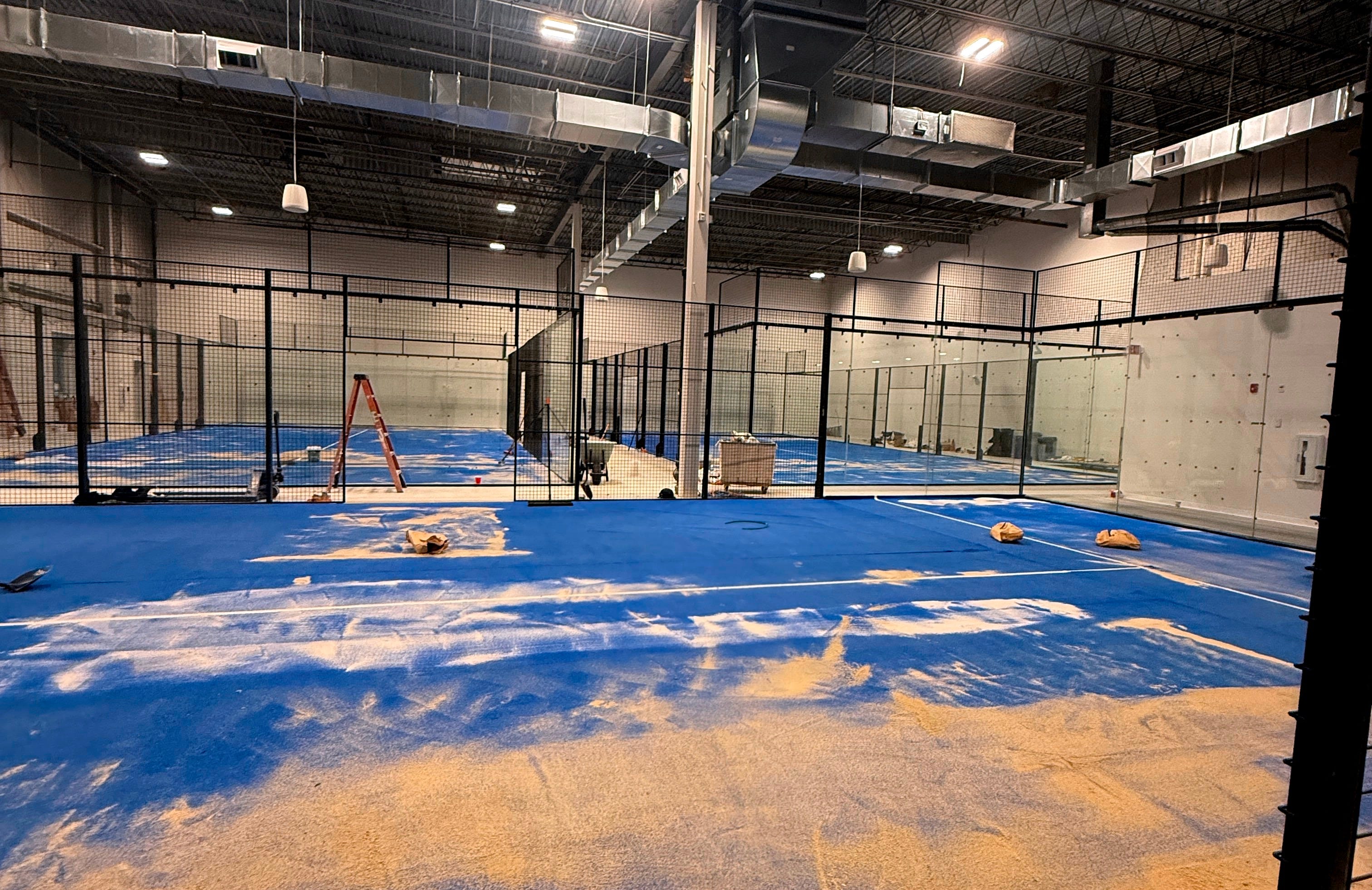
However, as I also recently witnessed firsthand at a good friend’s new padel club and larger, multi-club operators are learning the hard way, it’s a whole lot easier to talk about opening a bunch of new padel courts than it is to actually make it happen — in the U.S. anyway.
Of course, this is largely due to the umpteen — and often unforeseen — obstacles that a majority of U.S. club owners run into, which include (but certainly aren’t limited to) permitting and zoning issues, court shipping, construction, and installation delays, and an endless amount of bureaucratic red tape.
Call me cynical but I don’t really foresee any of these challenges dissipating, let alone disappearing, in the next few years — which is why I wanted to take a moment to highlight another powerful (albeit far more subtle and far less publicized) driver of U.S. padel court growth: club expansions.
Yet Another Road to Growth…
While it may admittedly be more exciting to talk about all the brand-new padel clubs popping up all over the U.S., including in places like Utah and my home state of South Carolina, a small and growing number of clubs around the U.S. are also adding to our ever-growing court count by simply expanding their existing footprints.
Two of the most notable early examples of this — both of which I wrote about for my former U.S. padel publication The Padel State — were Charlotte Padel Club (which expanded from its original three outdoor courts to six covered outdoor courts) and Ultra Padel Club (which grew from just a few courts to one of the largest facilities in the entire world).
More recently SLC Padel Club (where I’m actually playing tomorrow) chose to add a featured “Centre Court” to their original three courts, which is designed exclusively for private corporate events, team-building experiences, and VIP gatherings.
Meanwhile…
Padel Haus went on to add three stunning rooftop courts to their original four indoor courts at their first-ever location in the Willamsburg neighborhood of Brooklyn…
Earlier this year, Nicol NJ also added two outdoor courts to their original two indoor courts in Fort Monmouth, NJ…
Just this past week, Bay Padel added four new outdoor padel courts (along with seven new pickleball courts) to its original two indoor courts at their Dogpatch location in San Francisco…
A recently opened two-court club in Charleston, SC, known as The Point Racket & Social Club (which I mentioned a moment ago) already has plans to add an additional three courts as a phase-two expansion down the road, and…
Soon-to-open, multi-sport club Three Rackets in Broomfield, CO (which I recently toured) is also already exploring adding a few additional outdoor courts to their five indoor courts.

… Even Where You Might Least Expect It
Of course, it’s great to see more courts being added to clubs anywhere in the U.S., but I find it particularly encouraging that we’re not only seeing this happen in the heart of major metropolises like New York and San Francisco, but also in slightly more off-the-beaten-path locations like suburban Boston and Indianapolis.
Of their recent expansion from three to six indoor courts in Dedham, MA, Padel Boston founder Chase Woodsum tells me:
Finding a good location in this area that is priced reasonably and with high enough ceilings is one of the toughest things to do when opening a padel club. I got lucky when I stumbled upon our first location and despite casually continuing to look across the Boston area I have not found another location that checked all three of these boxes.
There was no plan to expand at this location when we opened with three courts, but when the warehouse attached to ours became available I checked out the dimensions and it just happened to be an almost perfect fit for three more padel courts and at the right time where we were getting in the groove with the original three courts and were starting to feel capped.
It felt like fate. Our club had the demand — being full most evenings and peak times during the weekends — to support three more courts and allow our community to grow and bring in new players.


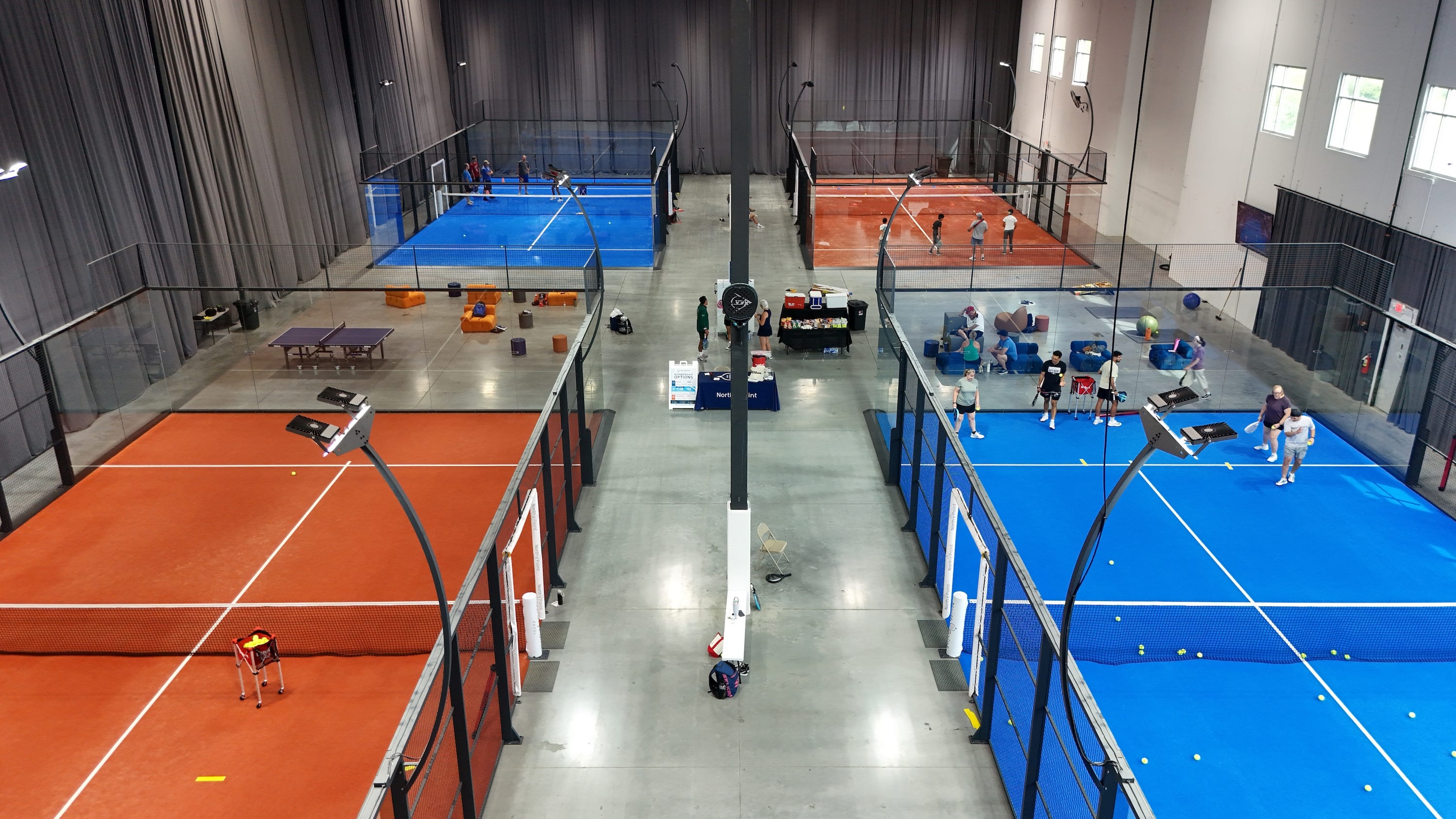
I also recently had a chance to chat with Jon Omer, the co-founder of Indiana’s first-ever padel club, NorthPoint Padel, who explained:
Our expansion to four courts has been driven by the positive reception we've seen with the first two courts that opened in January of this year. To date, we have seen over 500 players come in to play, with the majority being those with international roots now living in the Indianapolis region, and having some prior exposure to the sport.
But now Americans are also gradually learning about the sport and appreciating what makes it unique from other racquet sports. The audiences are blending well and the community of players our open plays and events are fostering has been fun to watch develop.
The Path of Least Resistance?
It’s becoming clearer by the day that opening and running a successful padel club in the U.S. is no easy task. But I think / hope we may start to see more and more clubs that are able to get up and running looking to grow via expansion in addition to just adding new locations.
After all, expanding an existing club generally has the benefit of:
Reduced infrastructure and site acquisition costs given that new courts can share the same common locker-room, pro-shop, and lounge facilities and that (hopefully) an entirely new and costly lease will not be necessary…
Faster zoning and permitting approvals given that the majority of the heavy lifting on this front should have already been done to get the initial courts open…
Streamlined staffing costs and economies of scale given that adding a fixed number of new courts to an existing facility should only require a fraction of the labor and other expenses required for a brand-new facility with the same number of courts…
Built-in demand given that it’s highly unlikely a club will choose to expand unless it’s clear they feel “the juice is worth the squeeze” so to speak, and…
Greater programming potential given that more courts mean more opportunities for lessons, camps, clinics, tournaments, and even full-blown padel academies.
Given all of this — not to mention the difficulty of finding suitable indoor locations in the U.S. — don’t be surprised if the next big news you hear about more padel courts opening in your area isn’t at a new facility but instead at the one you’ve already been playing at all along.
Know of other U.S. padel clubs that have recently expanded or have plans to in the near future? Please drop me a line or let us know in the comments below.
If you enjoyed this article, please be sure to subscribe to Padel Nation (for free!) to get exciting updates and important insights on the rapidly emerging U.S. padel scene like this one delivered directly to your inbox 2X weekly — or share it with a padel-playing friend.
Finally, as always, a big thank you to the friends and preferred partners of Padel Nation who help make posts like this possible, including:


Interested in becoming a friend or preferred partner of Padel Nation? Drop us a line here and let’s talk!
Oh, and one other thing… my brand-new 352-page padel book was just released last month. So, if you enjoy the work I’m doing in the U.S. padel space, you can support me by ordering a copy (or two!) online at Amazon or Barnes & Noble.
Or if you’re a club owner and you’d want to carry a handful of copies in your pro shop for “padel curious” people who are interested in trying the sport out but don’t know quite where to start, let me know and I can connect you with my publisher’s wholesale department.
Many thanks in advance!