



Editor’s Note: The following (lightly edited) guest feature comes from fellow American Collegiate Padel League advisory board member, Eric Loftus — who is a Partner at Cape & Island Tennis & Track, a sports construction firm that has built 3,350+ courts and tracks across New England over the past 50+ years.
He is also President of Northeast Padel and a Partner at Padel Solutions Group (an official U.S. distributor of Sportsfield Specialties courts).
He serves as Courts Division Director on the board of the American Sports Builders Association and chaired the joint editorial board that produced the ASBA/USPA Padel Court Installation and Maintenance Manual (2025) — the first national standard for padel court construction in the United States.
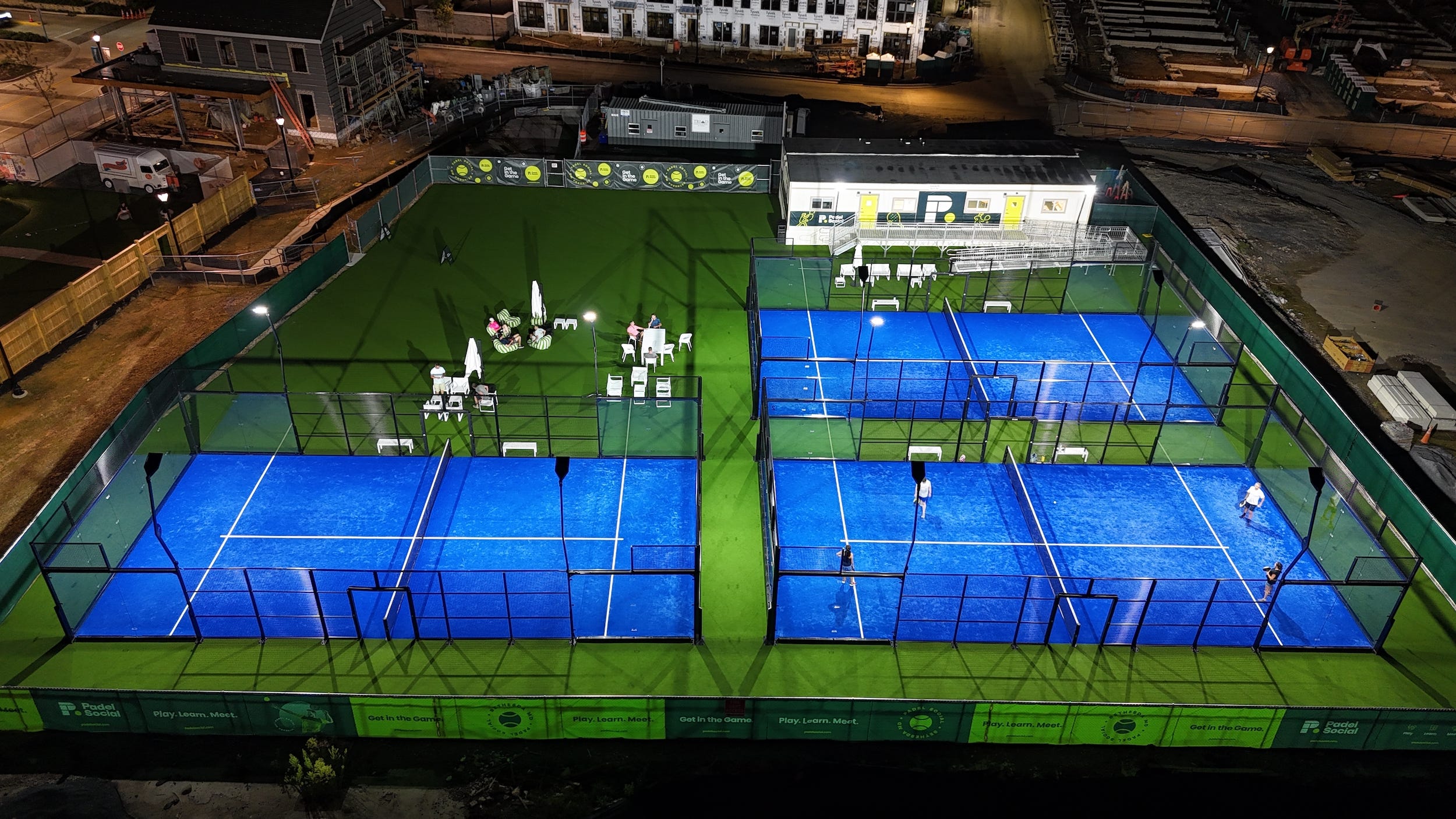
Padel is the fastest-growing sport in the world, and courts are going up across the United States at a pace that would have seemed impossible five years ago.
Investors are writing checks. Clubs are breaking ground. Developers are adding padel to project plans before the ink is dry on the site permits.
Yet a meaningful number of those courts — already built, already in use, already collecting membership fees — may not be compliant structures under the building codes of the jurisdictions where they stand.
That is not a marketing claim. It is a structural engineering reality, and it is one that the American padel industry needs to confront directly — before someone gets hurt, before an investor loses their capital, and before a single preventable incident poisons the reputation of a sport that has worked hard to earn its place in the American market.
What “Legal” Actually Means for an Outdoor Padel Court
In the U.S., outdoor structures — including padel courts — are governed by the International Building Code (IBC), which has been adopted in all 50 states in some form.
The IBC’s structural design chapter references ASCE 7, the national engineering standard published by the American Society of Civil Engineers, as the required basis for calculating design loads on buildings and other structures.
For an outdoor padel court, the governing design case under ASCE 7 is almost always wind.
A padel court is a large, semi-enclosed structure — a steel frame with significant vertical glass surfaces — that behaves aerodynamically like a partially enclosed volume. Wind pushes against the glass from outside and, when it enters through openings, pushes outward from inside simultaneously.
The resulting forces on the frame, the glass panels, the anchor bolts, and the foundation can be substantial, and they vary significantly by location.But wind is not the only load that must be engineered. ASCE 7 governs the full spectrum of forces that act on an outdoor structure.
In northern climates, snow loads must also be calculated — the weight of accumulated snow on any horizontal or near-horizontal surface, including canopies and roofed court structures. Foundation design must account for soil bearing capacity, frost depth, and the transfer of all wind and gravity loads from the steel frame into the ground.
In seismically active regions, seismic loads must also be considered.
Each of these factors is site-specific, and each must be addressed by a licensed engineer. A padel court is not a simple structure dropped onto a concrete pad — it is a system of interdependent structural elements, each of which must be designed to work with the others.
ASCE 7 requires that every outdoor structure be engineered for the specific conditions at its specific geographic location, using site-specific load calculations, exposure categories, and pressure coefficients. The calculations must be performed by a licensed structural engineer, documented in stamped drawings, and submitted as part of the building permit application.
This is not optional. It is not a recommendation. It is the legal requirement in the vast majority of U.S. jurisdictions.
The Enforcement Gap
Here is where the practical reality diverges from the legal requirement — and where the risk accumulates.
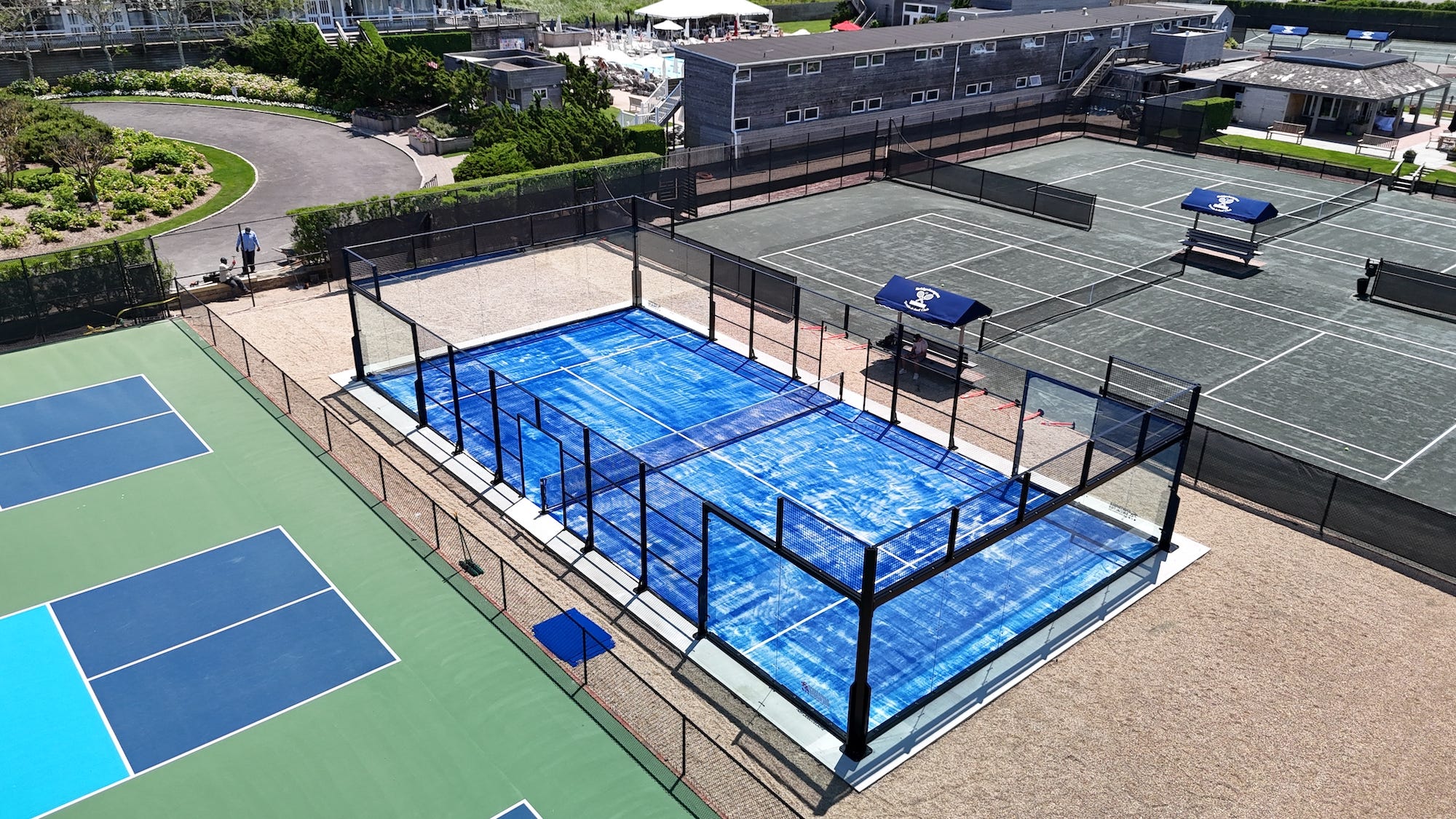
Building code enforcement in the U.S. is handled at the local level by Authorities Having Jurisdiction (AHJs), typically municipal or county building departments. These departments vary enormously in their capacity, expertise, and resources.
A building department in a major city with experienced plan reviewers and structural engineers on staff will scrutinize a padel court permit application carefully. A building department in a smaller municipality that has never processed a padel court application before may issue a permit based on a site plan and a basic description of the structure, without ever reviewing structural calculations.
This happens. It is not rare. And it creates a dangerous illusion of compliance.
A permit is not the same as compliance. A permit means the municipality processed your application. It does not mean an engineer independently verified that the structure meets the adopted building code.
If the IBC has been adopted in that jurisdiction — and in most of the U.S. it has — the legal requirement exists whether or not the building official caught the deficiency. The liability exposure for the property owner is real regardless of whether a permit was issued.
There is a related enforcement gap that compounds this problem: some outdoor padel courts in the U.S. are operating on temporary or conditional permits — approvals issued to allow construction to begin or operations to commence while full documentation is still pending.
Temporary permits are a legitimate part of the construction process, but they are intended to be transitional. When a court continues to operate indefinitely under a temporary permit, the structural review that should have triggered full compliance may never occur.
The court is open. Players are on it. And the engineering that should have been verified before the first match was played has never been reviewed.
The American Sports Builders Association (ASBA), in its first-ever Padel Court Installation and Maintenance Manual published in 2025, identified this directly as one of the most common mistakes in U.S. padel court construction: using courts not certified by American engineers and ignoring wind loads.
The European Standard Is Not the American Standard
The majority of padel courts currently being installed in the United States are manufactured in Spain and other parts of Europe. Many of these are excellent products, well-engineered for the markets they were designed to serve.
The problem is that they were designed to serve European markets — and the engineering standard that governs structural design in Europe is not the same as the one that governs it in the U.S.
European courts are engineered to Eurocode EN 1991-1-4, the European standard for wind actions on structures. ASCE 7 and Eurocode 1 are not interchangeable. They use different definitions of basic wind speed (ASCE 7 uses a 3-second gust speed; Eurocode uses a 10-minute mean wind speed), different pressure coefficients, and different load combinations.
A direct numerical comparison between a wind speed rating under Eurocode and a wind speed rating under ASCE 7 is not valid — the underlying calculations are fundamentally different methodologies.
A court that is structurally adequate for its intended European market is not automatically compliant with U.S. building codes. To be compliant in the United States, a court must be re-engineered for the specific U.S. site, with stamped PE drawings from a U.S.-licensed structural engineer, using ASCE 7 as the governing standard. A European CE mark or Eurocode certification does not satisfy this requirement.
This is not a criticism of European engineering. It is a statement of regulatory fact. The U.S. has its own building codes, and those codes require ASCE 7 compliance. Full stop.
The Fine Print Problem
There is a more specific issue that deserves direct attention, because it is being actively marketed as a solution when it is, in fact, not one.
Some manufacturers — particularly those selling into wind-exposed markets — advertise their courts as wind-load compliant, with impressive-sounding speed ratings. Read the fine print, and you will sometimes find a qualification: the wind load rating applies to the steel structure only, with the glass panels removed.
The logic offered is straightforward: remove the glass before a major wind event, and the structure survives. The glass is the “sail” that catches the wind; without it, the frame presents a much smaller cross-section to the wind and can withstand significantly higher speeds.
This is technically accurate. It is also practically useless as a compliance argument in the U.S. — and the physical reality of the glass itself makes the point clearly.
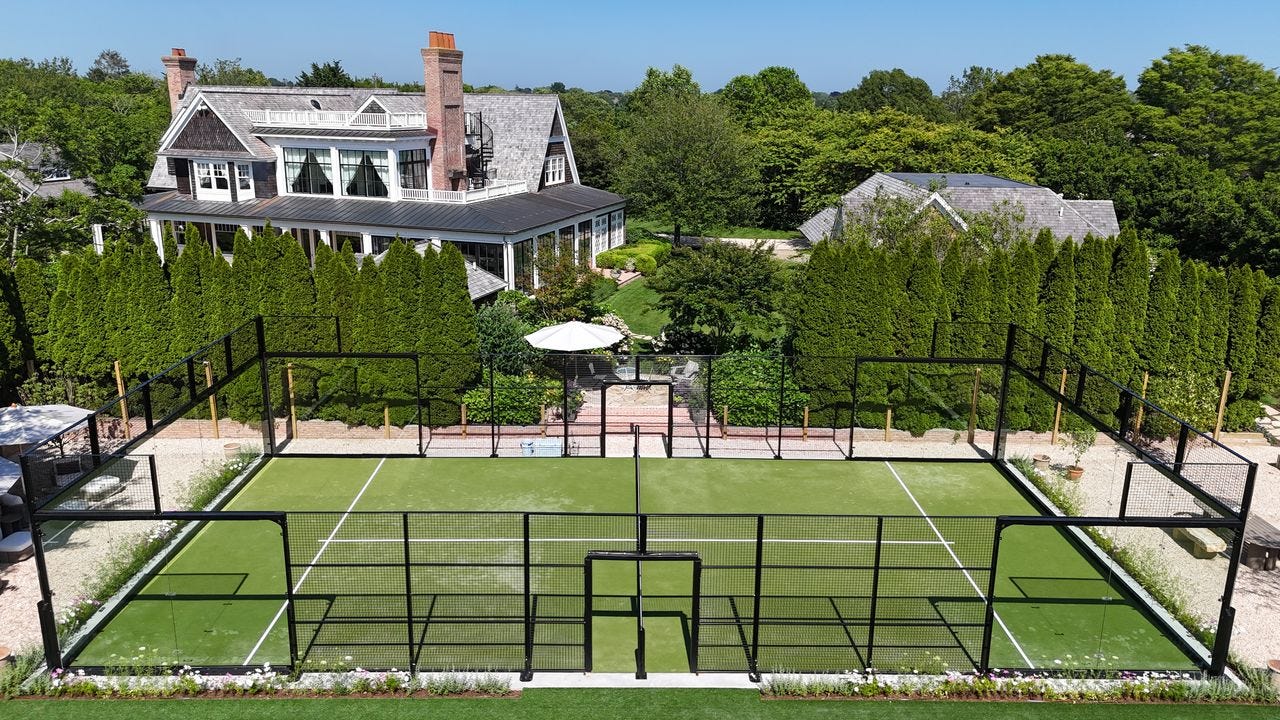
A standard panoramic padel court contains 18 glass panels, each measuring 2 meters wide by 3 meters tall (approximately 6 feet 7 inches by 9 feet 10 inches) in 12mm tempered glass — and each weighing approximately 400 pounds.
That is 3.6 tons of glass per court.
Removing all panels before a wind event is not a matter of pulling a few clips and stacking some panes in a corner. It is a multi-hour operation requiring trained personnel, specialized glass-handling equipment, and safe storage space for panels that cannot simply be laid on the ground.
Each panel must be carefully unclipped, supported, moved, and stored without edge contact — because tempered glass, once chipped or nicked at its edges, can spontaneously shatter. Replacement panels are not off-the-shelf items; they are custom-ordered components with meaningful lead times.
ASCE 7 requires that structures be engineered for wind loads as they will actually be used — with all components in place. A padel court is a padel court because it has glass walls. A structure with the glass removed is not a padel court; it is a steel frame. The building permit is issued for a padel court. The structure that must meet the code is a padel court — glass installed, in service, as designed.
Beyond the regulatory argument, there is a practical one that is equally decisive. As of today, there are only approximately ten to twelve installation crews in the entire U.S. with the training, equipment, and experience to properly remove and reinstall padel court glass panels.
These crews are spread across a country of 3.8 million square miles, and they are in high demand. They are not available on 24 hours notice.
A wind event does not schedule itself around crew availability. A nor’easter in New England, a severe thunderstorm complex in the Mid-Atlantic, a tornado watch in the Plains — these systems can develop and intensify in hours.
The operational model of “remove the glass before every significant wind event” is not a real-world risk management strategy. It is a liability disclaimer dressed up as a feature.
The question every property owner and club operator should ask is simple: In the event of an unexpected wind event, who is responsible if the glass fails? If the answer involves a clause about glass removal, the answer is you.
The same logic applies if the court carries a wind load rating that falls below the ASCE 7 design wind speed required for your specific location. A court rated for 90 mph installed in a jurisdiction where ASCE 7 requires a 115 mph design wind speed is not a compliant structure — regardless of what the marketing materials say. The liability does not transfer with the brochure.
What Real Compliance Looks Like
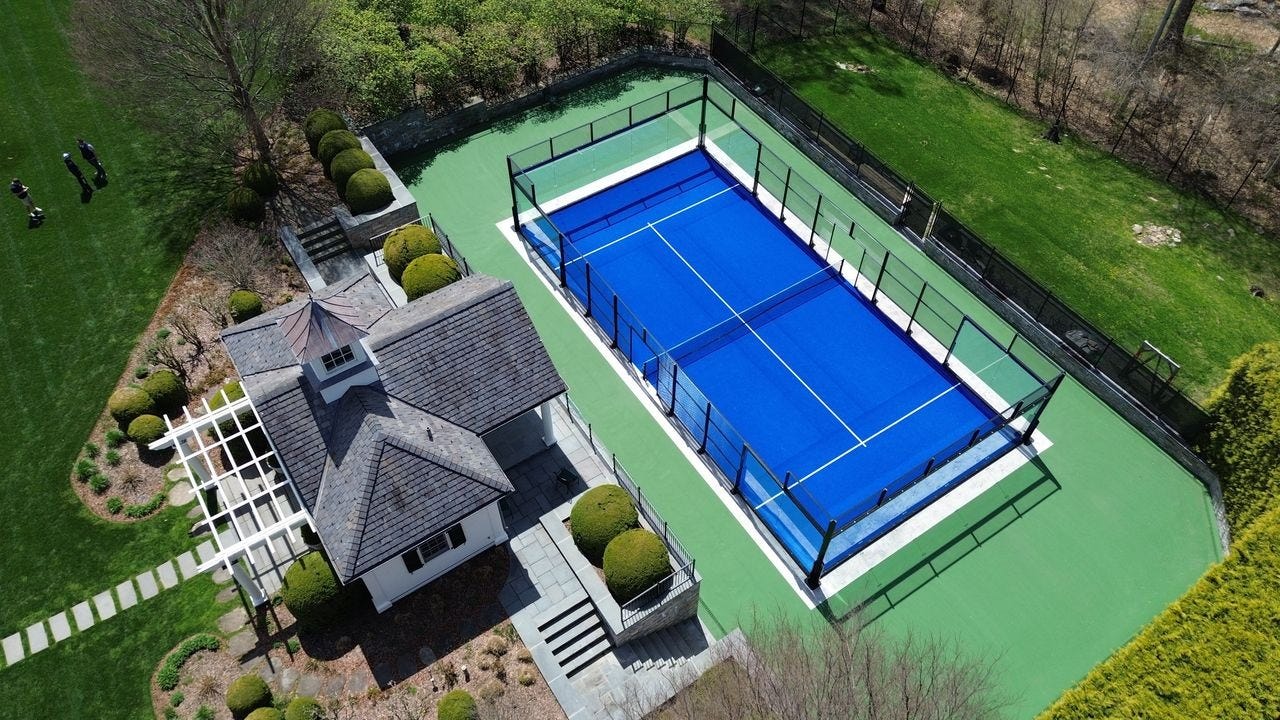
A properly engineered padel court in the United States involves the following, without exception:
Site-specific wind load calculation
The engineer of record uses ASCE 7 and the ASCE Hazard Tool (ascehazardtool.org) to determine the design wind speed for the specific geographic location, accounting for the site’s exposure category — whether it is in an open field, surrounded by trees and buildings, or in a coastal zone.
Full-system engineering — frame, glass, anchorage, and foundation
The wind loads calculated for the site must be transferred through every element of the structure: from the glass panels to the steel frame, from the frame to the anchor bolts, and from the anchor bolts into the concrete foundation. Each element must be independently verified.
A court that has a strong frame but under-designed anchor bolts, or a well-anchored frame on an inadequate slab, is not a compliant structure.
Stamped PE drawings
The structural calculations and construction drawings must be stamped by a licensed Professional Engineer (PE) registered in the state where the court is being built. This is the document that the building department reviews, that the inspector references, and that protects the property owner in the event of a dispute.
Foundation designed as part of the system
The concrete slab or perimeter foundation is not a generic construction element — it is a structural component of the court system. Its thickness, reinforcement, and anchor bolt pattern must be designed specifically for the wind loads at that site. A standard concrete slab poured without engineering input is not a compliant foundation for an outdoor padel court.
The Questions Every Buyer Should Ask
Before signing a contract for an outdoor padel court installation, every property owner, club operator, and developer should have clear answers to the following questions:
1. Is this court engineered to ASCE 7 — with the glass installed?
Not “wind resistant.” Not “tested to Eurocode.” Not “rated to 130 km/h.” Engineered to ASCE 7, with the glass panels in place, for the specific wind speed at this specific site.
2. Will I receive PE-stamped structural drawings?
Stamped by a licensed Professional Engineer registered in this state, covering the frame, the glass, the anchorage, and the foundation.
3. Who is designing the foundation?
Is the slab designed as part of the court system, or is it a generic concrete pour? Who is the engineer of record for the foundation, and are they coordinating with the court manufacturer’s structural requirements?
4. Who is responsible if the court fails in a wind event?
This is the question that clarifies everything. A manufacturer or installer who is confident in their engineering will answer it directly.
5. Who will maintain the safety standards of this court after installation?
A court is not a one-time transaction. Glass panels develop edge chips over time that can compromise structural integrity. Anchor bolt connections can loosen. Silicone seals that cushion glass against steel frames degrade with UV exposure and temperature cycling. The same engineering standards that govern the initial installation apply to the court’s ongoing condition.
Ask who is responsible for periodic inspection, what a maintenance program looks like, and what the process is for identifying and addressing structural concerns before they become failures. A court without a maintenance plan is a court whose compliance degrades from the day it is commissioned.
The Bigger Risk: What a Single Failure Could Do to the Entire Industry
There is a consequence to non-compliant construction that goes beyond the individual property owner, beyond the specific court, and beyond the specific storm. It is the one that should concern everyone in the American padel industry — builders, manufacturers, clubs, investors, and players alike.
Padel is still a young sport in the United States. Awareness is growing rapidly, but the sport does not yet have the deep cultural roots in this country that it has in Spain, Argentina, and other parts of the world where it has been played for generations.
The American public is still forming its opinion of padel — what it is, whether it is safe, whether it belongs at their club or in their community.
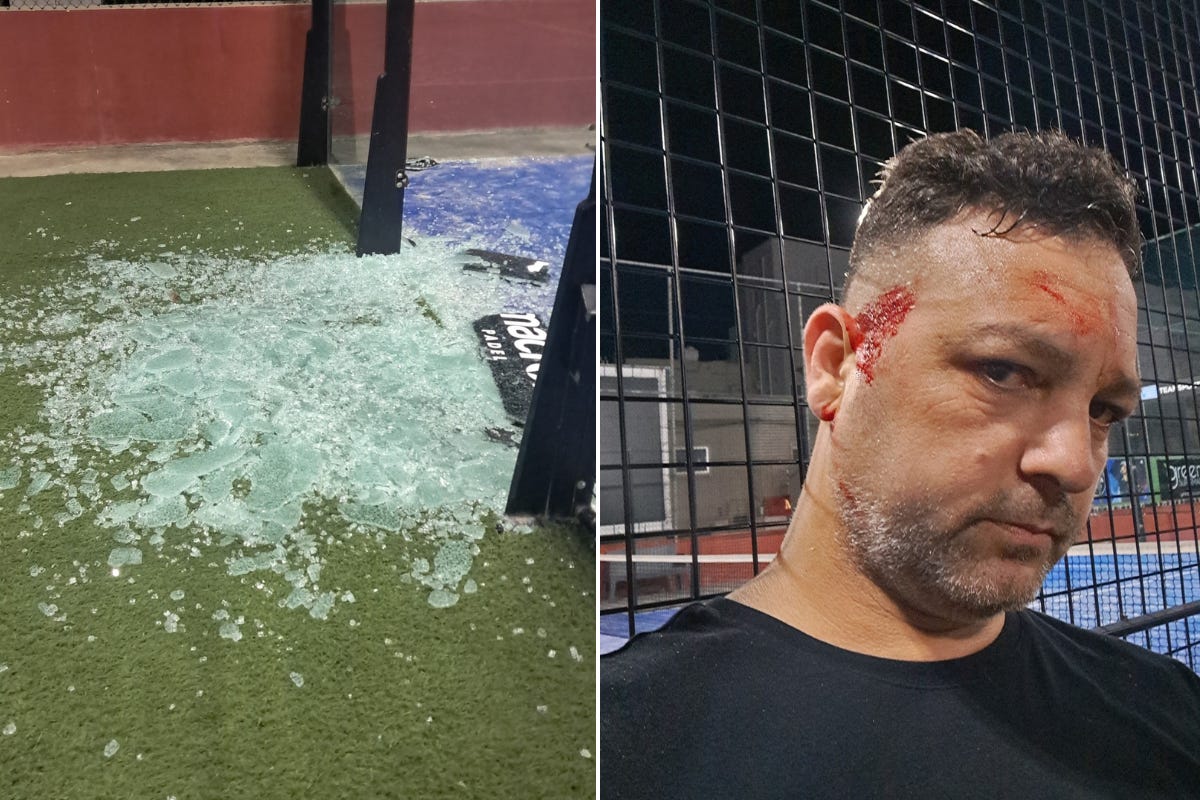
A single high-profile structural failure — a court that collapses in a storm, a glass panel that shatters while players are on the court, an injury that makes the local news — has the potential to set the entire industry back by years. Not because padel courts are inherently dangerous. They are not, when they are built correctly.
But the average person reading a headline does not know the difference between a properly engineered, code-compliant court and one that was installed without a structural engineer ever reviewing the drawings.
They will not read the fine print. They will read: “Padel Court Collapses. Players Injured.”
That headline does not damage one manufacturer or one installer. It damages padel on the whole. It gives ammunition to every zoning board that is already skeptical of the sport, every insurance underwriter who is already nervous about it, and every club board member who was on the fence about adding courts. It creates a reputational problem for an industry that has worked hard to establish itself as a serious, legitimate, and growing part of American sports culture.
This is the argument that transcends business competition. No one in this industry — not the American manufacturers, not the European importers, not the installers, not the clubs — benefits from a safety incident caused by a non-compliant court.
We are all building the same market. A failure anywhere in that market is a failure for all of us.
The standard exists. The engineering is well understood. The path to a safe, compliant, insurable court is not complicated or prohibitively expensive. What is required is the commitment to follow it — and the willingness to ask the hard questions before breaking ground, not after the storm.
A Note on Responsibility
The U.S. padel industry is at an inflection point, and the sport is growing faster than the infrastructure knowledge base that supports it.
Building officials are processing permit applications for a structure type they have never seen before. Property owners are relying on manufacturers and installers to tell them what compliance means. Installers are sometimes relying on European certifications that do not translate to U.S. code requirements.
This is not a situation that calls for alarm. It calls for education. The engineering standards are clear. The liability framework is clear. The path to a compliant, safe, insurable outdoor padel court is well-defined.
What has been missing is a clear, direct explanation of what that path looks like — and what the consequences are for those who take a different one.
The American padel industry has an opportunity to set a standard that the rest of the world will eventually follow. The United States has some of the most rigorous structural engineering requirements for outdoor structures of any country in the world, and for good reason.
Building to those standards is not a burden. It is a competitive advantage — for the builders who do it, for the property owners who require it, and for the sport itself.
Enjoy this article? If so, please be sure to subscribe to Padel Nation to get exciting updates and important insights on the rapidly emerging U.S. padel scene like this one delivered directly to your inbox 2X weekly — or share it with a padel-playing friend.
Finally, as always, a big thank you to the friends and preferred partners of Padel Nation who help make posts like this possible, including:


Interested in becoming a friend or preferred partner of Padel Nation? Drop us a line here and let’s talk!
Oh, and one other thing… I’ve actually got a full-blown padel book coming out in July. So, if you enjoy the work I’m doing in the U.S. padel space, you can support me by pre-ordering a copy (or two!) online at Amazon or Barnes & Noble. Many thanks in advance!