



Editor’s Note: The following guest article is from friend, fellow racquet-sports lover, and author, James (Jim) Zug. When I asked him for a bio for this piece, he humbly responded with:
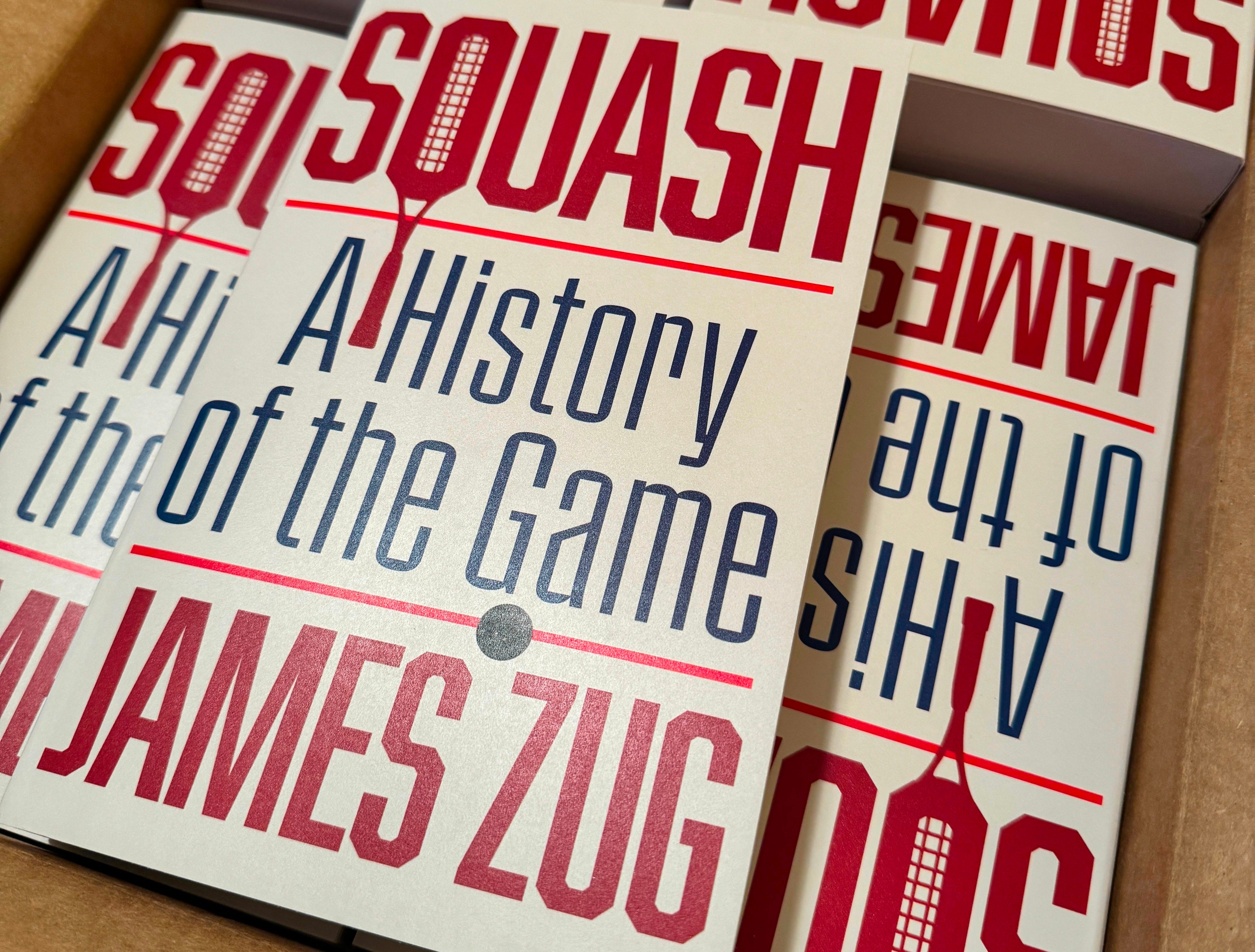
“James Zug is a veteran squash historian and journalist. He has a Substack newsletter, Spin for Serve, that covers many obscure racquet sports. His book, Squash: A History of the Game, just came out in paperback.” But I’m not going to let him get off that easy…
Because this isn’t just a squash history book, it’s THE definitive squash history book (which also delves into the fascinating history of all modern racquet sports via ancient games like jeu de paume, court/real tennis, and rackets — and has a foreward penned by George Plimpton, no less).
Jim was also a long-time contributor to Squash Magazine and Vanity Fair and has had his racquet-sports writings published by everyone from The New York Times to The Atlantic to Racquet Magazine.
Which is why, in the Acknowledgements section of my upcoming padel book, I thanked him for, “elevating writing about racquet sports to an art form” and inspiring me to (try to) do the same.
Teaching Pros
In the 1970s squash was freaking out about racquetball. It was booming, it was exciting, it was the hot new thing.
Squash was staid, boring, still mostly a private game; racquetball was all about access: public courts, outdoor courts, ease of entry, no clothing rules. Thirty thousand courts appeared almost overnight in the States.
Then racquetball began a slow and steady decline.
Today it is a shell of itself. The U.S. Open has stopped. There are maybe 2,500 indoor courts. Many are empty.


I’ve been a member of two clubs with racquetball courts, a fitness club in DC and a YMCA in Delaware. Neither had teaching pros. In both cases, I watched as the racquetball cohort slowly leached away. You can argue about why racquetball has declined, but for me the biggest reason is they haven’t had enough teaching pros.
They are essential: texting, WhatsApping, calling and cajoling players, setting up box leagues and tournaments, helping with equipment, getting you to come back again for another match. I’ve seen this in the padel world — if there is a pro present and servicing the club, it thrives.
Kids
More than forty percent of the 3,000 squash courts in the U.S. are at high schools and universities. It is a central backbone of the game. Junior squash fuels squash, and then the teams take off. Over two hundred high schools send squads to the National High Schools—it is the largest annual tournament in the world; nearly a hundred middle school teams come to the National Middle Schools; over eighty universities have a varsity or club squash team (or both).
In many countries squash has suffered a decline in recent years, but not in the U.S., and one reason is this continual, institutionalized pipeline of players coming through the school and college systems. Each spring about three hundred people graduate from university having played organized squash. That adds up: a regular outflow of young adults who want to continue getting on court.
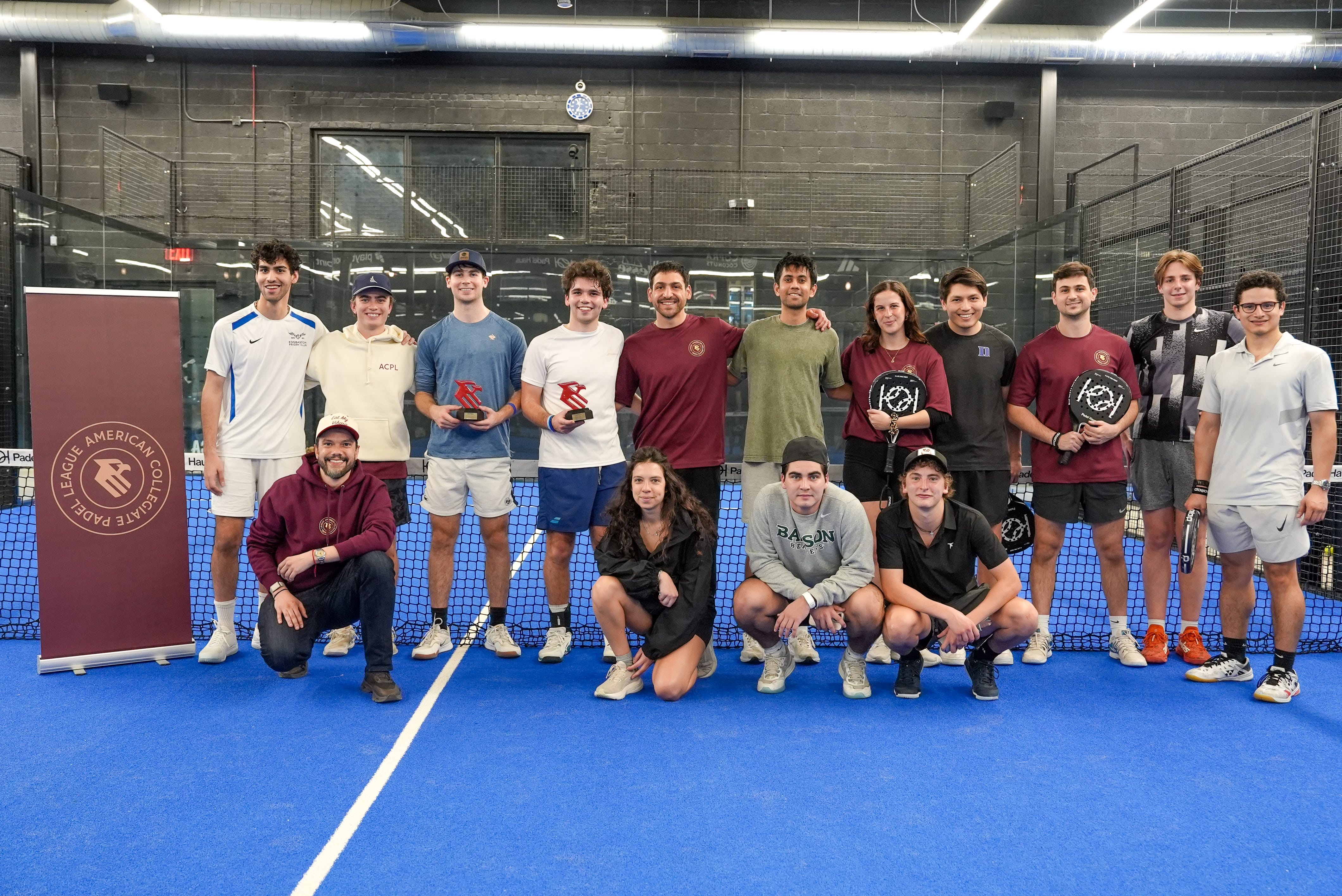
U.S. collegiate padel is a good start.
Travel
For adults, the key is travel. Many vibrant squash clubs have plenty of intra-club activity. But the essence of squash has always been getting out of your own home club and playing elsewhere, meeting new people, cementing friendships, getting connected.
In 1903, less than three years after the first squash court arrived in Philadelphia, there were seven clubs with courts in the city, and they decided to organize a league.
Ever since, teams have gone on the road. Singles leagues in two dozen cities are the winter anchor for the game; for cities like Philadelphia and Toronto, the squash doubles league occupies much frontal-lobe attention each winter, with Tuesday nights or Thursday nights being sacred.
Not only do you play for your club but often for your city. Today we have dozens of annual inter-city matches criss-crossing the country. One is the Hahn Cup, started in 1963, between Indianapolis, Cincinnati, and Louisville. I live in a city with four padel clubs but so far no inter-club matches.
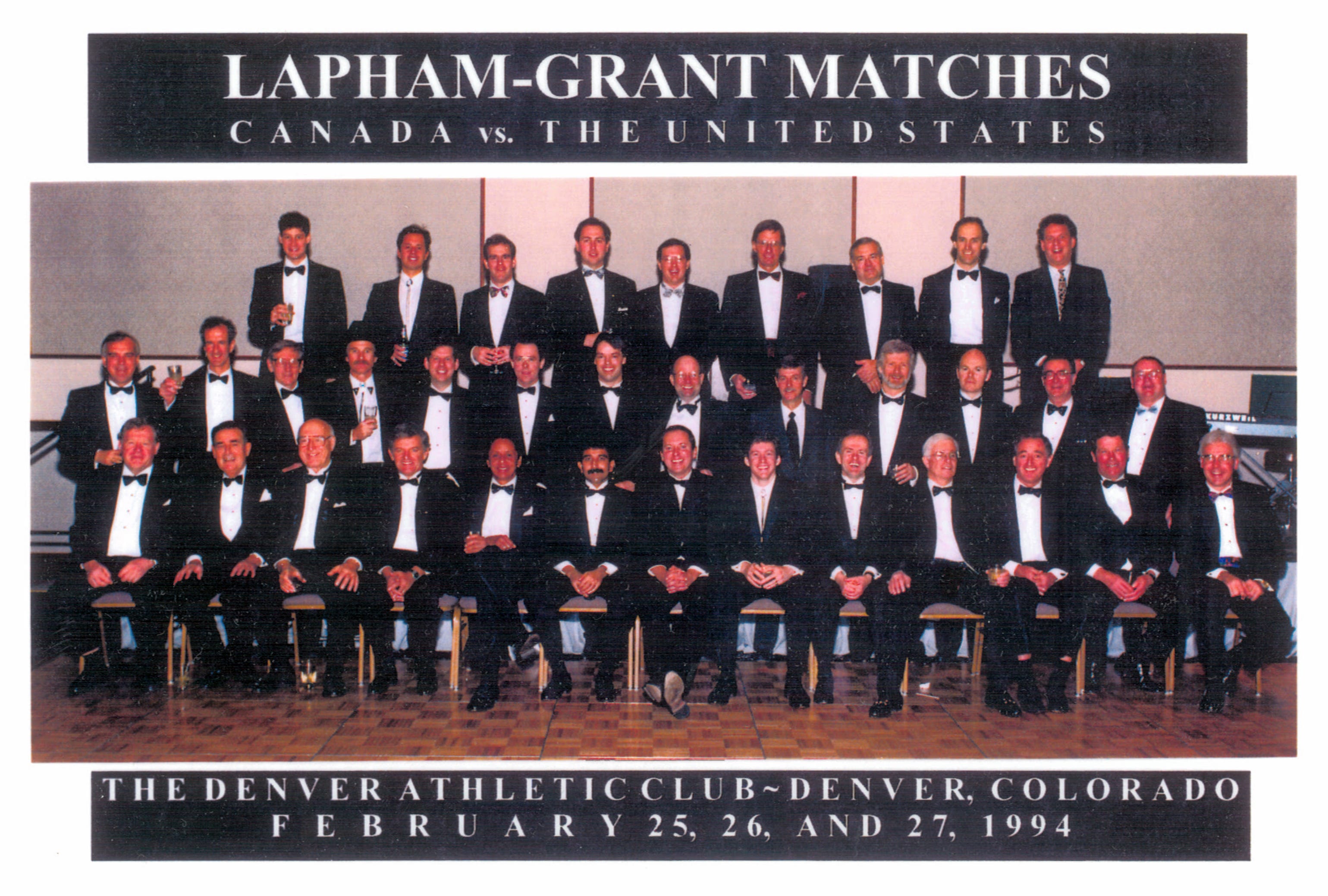
Or your nation. There is an annual U.S. v Mexico match and a U.S./Mexico/Canada weekend; the granddaddy of them all is U.S. v Canada, started in 1922 (the oldest annual international squash rivalry) and still a major blowout each spring.
There is also continual reinvention: a post-pandemic newcomer is the Trans-Atlantic Masters Squash Test featuring teams from Canada, Great Britain, Ireland and the U.S. Sprinkle in tours, invitational cups, lost weekends and member-guests, and the squash map is thick with women and men driving and flying somewhere to represent someone larger than themselves.
That is why the Anglo American Padel Cup might be the greatest legacy of Bill Ullman’s remarkable tenure as president of USPA.
Olympics
Stop worrying about padel and the Olympic Games.
Squash spent many decades trying to get into the Olympics. There were efforts dating back to earliest days of the Games (especially after the war for Helsinki in 1952). In 1986 the IOC officially recognized squash as a sport, and the first real attempt came right then to get into Barcelona in 1992. Squash failed; badminton succeeded, with rumors of an alleged seven-figure “donation” smoothing the way.
Thereafter, squash’s world governing body and a few large and wealthy national federations spent oodles of time, treasure and sometimes talent attempting to get into the Games.
It mattered not at all. Outsiders thought that it would help when the Games were in a city renowned for squash (Atlanta in 1996; Sydney in 2000; London in 2012; and Paris in 2024).
Nope. Squash ran tremendously expensive campaigns that emphasized how squash fulfilled all the IOC criteria for admission: we are in all these countries, we have gender parity, we have youth, it would be the pinnacle to win a gold medal, etc. Nope.
We almost got in again and again, only to be tripped at the last furlong.
Squash got in for Los Angeles in 2028 based on relationships: who knew who, quiet conversations. If padel gets into Brisbane 2032, it will be for the same reason.


For padel, my advice is don’t waste your three T’s on it. Padel is unlikely to make the Games for the same reason why all the other sports recently added to the Summer Games got in: Does padel bring in big corporate sponsorship? Does it move the needle on television?
Rugby, cricket, golf, baseball, surfing, lacrosse—these are massive cogs in the sports industrial machine and dwarf padel (and squash) in every metric. Even flag football, hitherto unknown outside the States, will be a huge sport in the 2030s because of the world’s biggest sport’s league, the NFL, is behind it.
Instead: get Kevin Vaz, the CEO of JioStar, to fall in love with padel.
The Summer Games are apparently headed to India in 2036, and Vaz is the head of the country’s largest media and entertainment business.
You’ve got time.
Enjoy this guest post? If so, please be sure to subscribe to Padel Nation to get exciting updates and important insights on the rapidly emerging U.S. padel scene like this one delivered directly to your inbox 2X weekly — or share it with a padel-playing friend.
Finally, as always, a big thank you to the friends and preferred partners of Padel Nation who help make posts like this possible, including:


Interested in becoming a friend or preferred partner of Padel Nation? Drop us a line here and let’s talk!
Oh, and one other thing… I’ve actually got a full-blown padel book coming out in July. So, if you enjoy the work I’m doing in the U.S. padel space, you can support me by pre-ordering a copy (or two!) online at Amazon or Barnes & Noble. Many thanks in advance!