




Editor’s note: The following (lightly edited) feature article is the seventh installment of a new “How I Became Obsessed With Padel” series we’re rolling out from regular guest contributor, Scott Matulis, a former PR Director for the Worldwide Senior Tennis Tour who discovered padel in Vegas a few years ago and can now hit balls off of the glass occasionally. He is the author of the LinkedIn and Substack serial novel The Applicant and his own padel Substack.
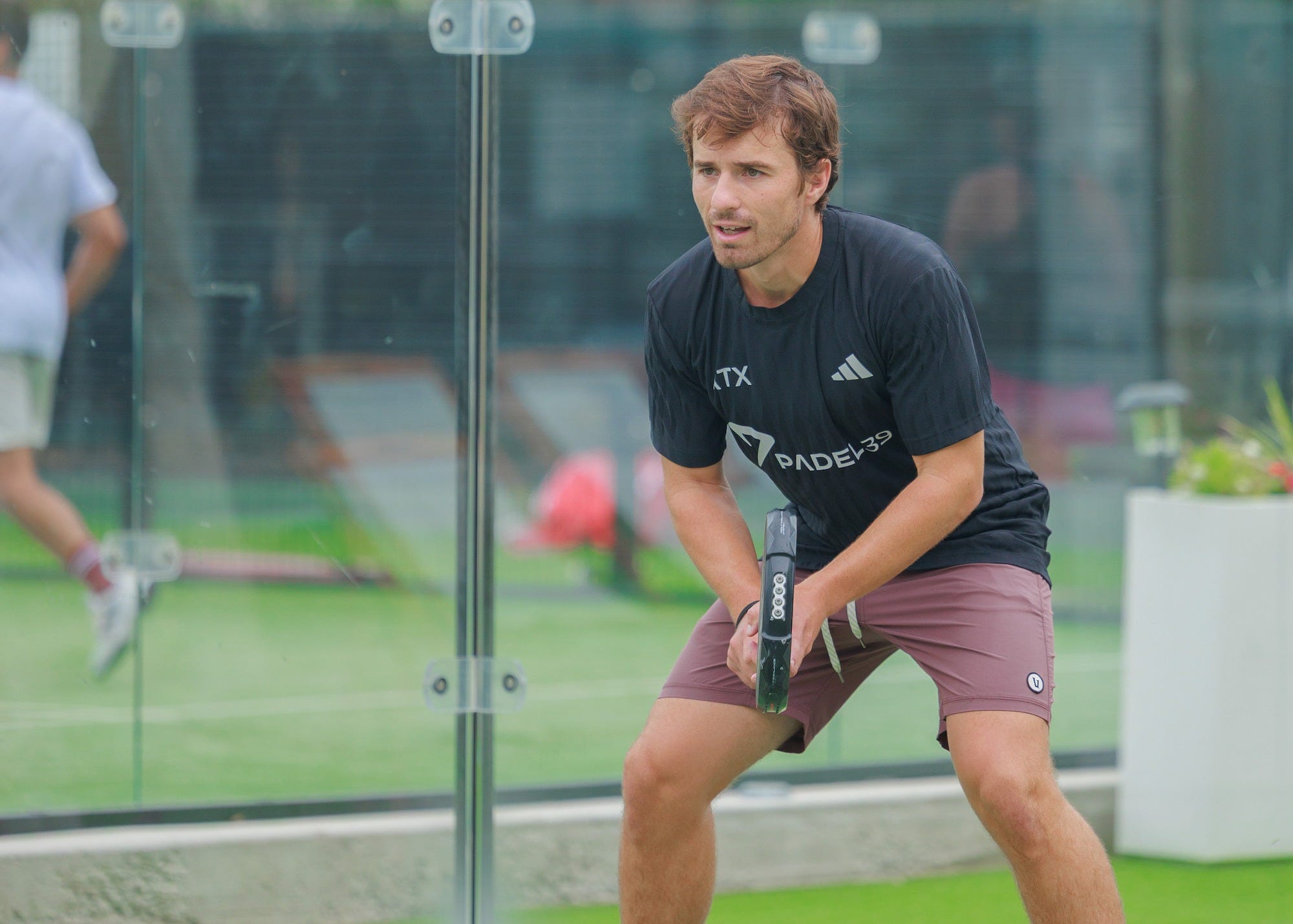
Will Boyce is another one of those super-smart, young guys who is driving the growth of padel in the U.S. After a collegiate tennis career, an MBA, and a stint in the finance world, Will discovered padel and realized that there was a great business opportunity for padel in the United States.
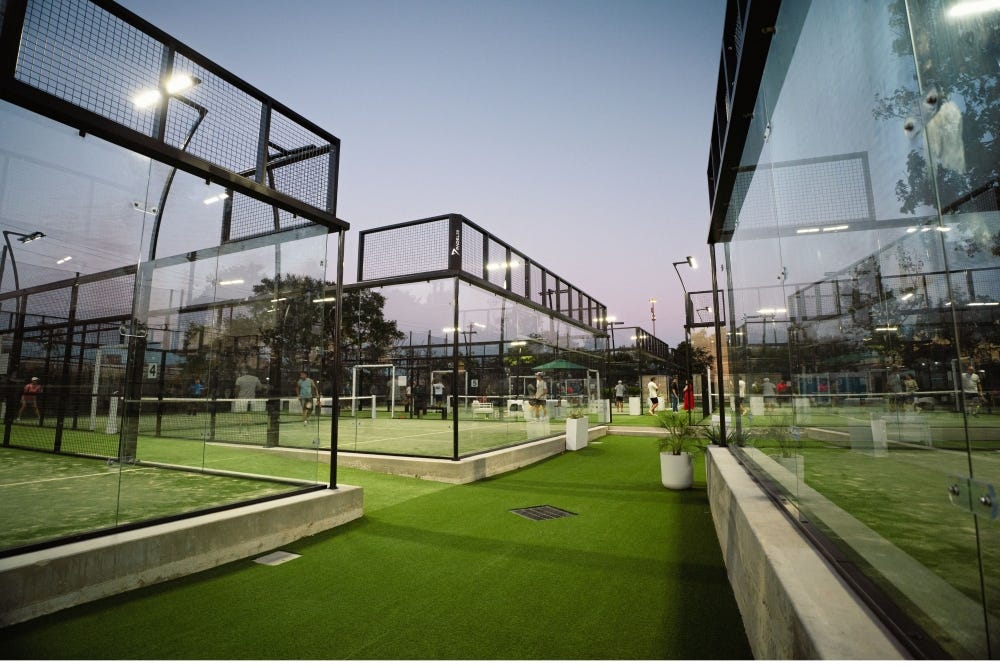
He founded Padel39 in 2024 in Austin, TX. Just two years later, it has expanded to two Austin clubs, with a third planned for South Austin. This past January, Boyce also bought an existing club in Dallas (formerly known as the Dallas Padel Club), and is transforming it into a Padel39-branded club offering much, much more than padel.
I sat down with Will, asked him how he became obsessed with padel, and how he sees the opportunity for Padel39 in Texas and the U.S. as a whole. Here’s what he told me…
I know you’re French, you’re a former college tennis player, and you’ve got an MBA, but how did you become a padel person?
For me it’s a bit unique, because I became a padel player and a padel business owner at the same time.
As you said, I played a bit of college tennis back in the day, and all my friends in France were starting to pivot to padel. All the good tennis players were starting to get better, but also all of the non-tennis players. Everybody.
When I saw that, the total addressable market just seemed so big for padel. There were so many people getting excited about the sport, and there was nothing in the U.S.
I got excited about the business. I had played padel only a few times with my friends back home because I was already living in the U.S. In New York there was nothing. It was right before Padel Haus opened.
I was playing a little bit in Europe. I saw that it could be a great business. I started wanting to play more in the U.S.
Where did you start playing in the U.S.? What club?
I went to Miami the first time just because I was curious about the clubs there. The first time I played in the U.S. was at Wynwood and Ultra.
I had probably played about 10 times before that in France. I went down there because I wanted to check out what the clubs were like in the U.S.
Then I went to Padel Haus once it opened in New York. I fell in love with the game, and that kind of made me say, ‘Okay, I think this game is amazing. It’s going to be super fun to see it grow in the U.S., and I think there’s a really good business opportunity as well.’
Tell me about the very first time you ever played padel. What was your first impression?
I thought it was fun instantly and I was excited about the learning opportunity. And I was intrigued by the whole tactical aspect. I felt great about the contact point and the workout and the fact that the points were longer. The contact point was amazing.
In pickleball, the contact just feels dead, and in tennis, you have to train a lot — and if you don’t train anymore and you’re not hitting the sweet spot all the time, it’s frustrating.
In padel, it’s the opposite. The contact feels really pure, and the points are longer, so it’s more fun.
I also almost felt like I had a headache to some degree because you need to use your brain a lot more in padel, especially when you’re new to it.
You’re thinking, ‘How does this angle work? If this guy is left-handed, why does it go in this direction versus if he’s right-handed? Do I go side wall first or back wall first? Do I try to do something else?’
There are just so many more tools.
For me, the hardest part coming from tennis was the overheads and the people from other countries making fun of me in languages I don’t understand. How about for you?
Defense. Letting the ball go and using the walls.
Every tennis player tries to take everything on the volley instead of slowing the game down as much as possible.
I think slowing the game down is probably the hardest part.

In your opinion, where is the U.S. padel market right now? Is it just at the beginning? How many padel clubs can it support — or is it really just city by city?
I think I have a bit of a controversial opinion there.
Right this minute, I’d say we’re still somewhat at the beginning, but we’re also starting to feel some skepticism from operators about its viability.
For the last two years, all we heard was, ‘Padel is going to take the U.S. by storm. We’re going to see 30,000 courts by 2030,’ or whatever the number was, and everybody is going to be crushing it.
I think it’s simply not the case.
Most operators in the U.S. struggle when you talk to them. Only a few — ourselves and others in that category — are lucky enough to have a good business, more because we diversify our revenue streams and try to provide an experience that goes beyond padel, whether that’s sports, social and so forth.
The people who are solely focused on the sport itself and are purely transactional — come play because you love padel and then leave — are struggling. That’s because the sport has had slower adoption than we thought.
It’s supply and demand. I think there’s a high barrier to entry in the U.S., whether it’s regulatory or capital constraints. That makes it difficult to build.
I’m still extremely bullish on the fact that the sport will take off. But I think it’s always going to be a balancing act between growing supply in order to create demand. We’re struggling to get more and more sustainable supply out there.
I’m bullish on the sport on its own, and I think it’s going to go extremely well, but I think it’s still going to take time for the education piece.
I’ve interviewed quite a few club owners and everybody talks about community and building community. Is that what keeps people coming back, beyond simply how much fun the sport is?
If the question is how important community is for padel, it’s the number-one answer in almost any survey we run, and even in Playtomic reports.
Why do people play padel? The number-one answer is social.
You have four people on a court that’s 20 by 10 meters. It’s quite small. You get more interaction. You get to talk more than on a tennis court. There are all of those factors that make the sport much more social than others, and that’s the essence of what drives people to it.
If you’re able to build community, create the right spaces and program around that, community becomes a key factor.
And in the U.S., I think Americans want to belong to something, whether it’s a country club at older ages or a social club for millennials and Gen Z. There’s always a desire to belong somewhere.
The operators who focus on the community aspect and can create those spaces should succeed.


Is that why you decided to build Padel39 the way you did?
We always built Padel39 around padel, social, and wellness. Those were the three pillars, and they still are today.
Where we have started to focus more is really on the social side and building a space that will retain people for longer than just an hour and a half.
In order to do that, you usually have to focus on hospitality and food and beverage, and that’s where we went in that direction. We wanted community.
It’s also a business decision. If you’re able to bring hospitality into it, the economics can be quite different.
I see two levers. There’s a purely strategic P&L decision, but there’s also a real marketing opportunity.
In this sport, we’re doing the hardest thing right now, which is the awareness and education stage in the customer journey.
If you’re able to build a good hospitality program that sits on top of your padel business, you can leverage that as an awareness and marketing tool to bring new people to padel.
For us, it was a combination of those two things.
Everybody I talk to says the challenge is attracting new padel players because nobody knows about the sport.
It seems to me that the people in the U.S. who know about padel are wealthy people who’ve traveled to France, Portugal, or somewhere abroad and discovered it there or else Hispanic people who already know the sport. Is that fair?
You’re spot on with the early adopters.
There’s definitely a Hispanic demographic, although maybe the caveat is that it’s people within that demographic who have the disposable income to afford it.
The early adopters are more or less the ones you described: cosmopolitan people, Europeans who already have awareness of it, and South Americans as well. So there’s a strong Hispanic demographic in that sense.
Then you definitely have the wealthiest segment. It has become part of the VIP scene in the U.S. It’s that networking sport and so forth.
There’s definitely a trend factor to it within VIP circles. Those two categories are early adopters.
I’m guessing that you’re a soccer fan as well. How long do you think it will take before the U.S. dominates padel the way we dominate soccer?
I enjoy watching soccer. Especially the French national team and PSG. Those are probably my two favorite teams. As for your question, I think it’s still going to take a while for the U.S. to dominate soccer, and I think padel will take even longer.
I’m probably not the right person to ask this. I don’t think I have that macro experience or knowledge about the life cycle of sports within a country.
But my uneducated opinion would be that it all starts with bringing in great professionals and having great infrastructure that allows you to create the right training culture and bring in the right experts who can develop athletes from the youngest ages to the highest level.
It’s a matter of infrastructure, culture, and coaching quality.
Then you need to have a sport that’s popular enough and has good incentives for the average American to choose it instead of tennis or American football and so forth.
Americans have focused their best athletes on football, basketball — the big four sports. They haven’t had their best athletes in soccer because it’s not as popular.
It requires a structural shift plus expertise in general. You’re talking about 50 years for all of that to happen. I don’t see it anytime soon.
To learn more about Padel39 and its current locations in East and North Austin or future locations in South Austin and Dallas, please be sure to visit their website or follow them on Instagram.
If you enjoyed this article, please be sure to subscribe to Padel Nation (for free!) to get exciting updates and important insights on the rapidly emerging U.S. padel scene like this one delivered directly to your inbox 2X weekly — or share it with a padel-playing friend.
Finally, as always, a big thank you to the friends and preferred partners of Padel Nation who help make posts like this possible, including:


Interested in becoming a friend or preferred partner of Padel Nation? Drop us a line here and let’s talk!
Oh, and one other thing… my brand-new 352-page padel book was just released last month. So, if you enjoy the work I’m doing in the U.S. padel space, you can support me by ordering a copy (or two!) online at Amazon or Barnes & Noble.
Or if you’re a club owner and you’d want to carry a handful of copies in your pro shop for “padel curious” people who are interested in trying the sport out but don’t know quite where to start, let me know and I can connect you with my publisher’s wholesale department.
Many thanks in advance!