



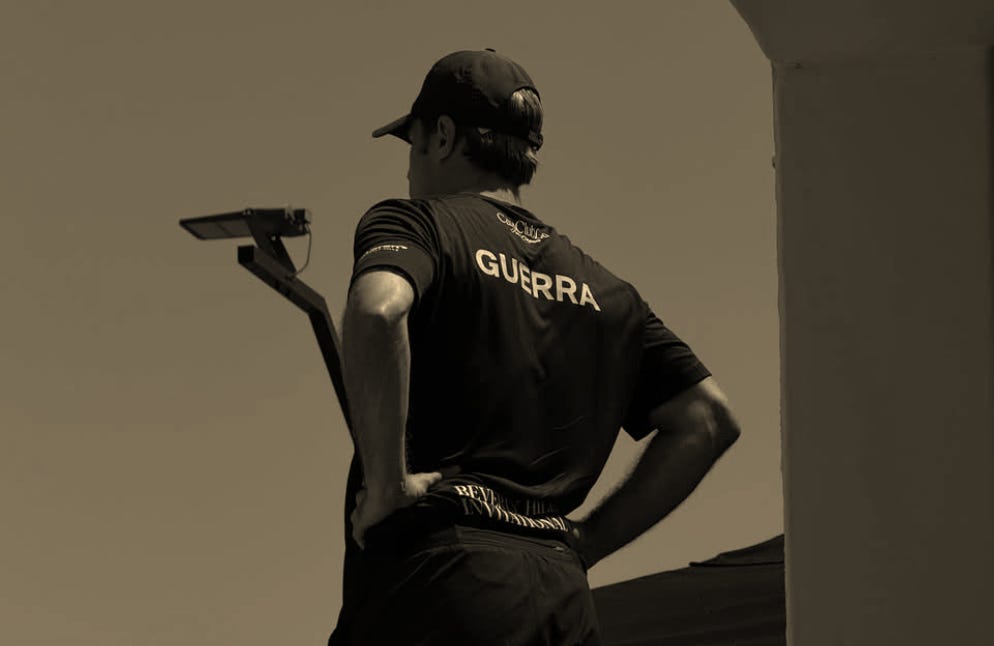
Editor’s note: The following (lightly edited) feature article is from regular guest contributor, Scott Matulis, a former PR Director for the Worldwide Senior Tennis Tour who discovered padel in Vegas two years ago and can now hit balls off of the glass occasionally. He is the author of the LinkedIn and Substack serial novel The Applicant.
I wanted to know about the early days of padel in Los Angeles, so I asked Jon Guerra.
He’s been around the local padel scene longer than most people here and has seen it from a variety of angles: player, coach, club operator, and guy from another country trying to figure out how we do things here.
He’s been instrumental in growing a tiny community into something much bigger, and he’s currently the General Manager at the soon-to-open Los Angeles Padel Club (LAPC).
Like a lot of the guys who have been beating the daylights out of me, Guerra learned padel as a kid growing up in Spain. He came to the United States on a soccer scholarship, at Lindenwood University in St. Louis, where he almost immediately tore his ACL.
After three years in Missouri, where there was zero padel to be played, he finished his master’s degree in Interactive Media and Design and moved to Los Angeles — where he promptly tore his ACL again.
Oddly enough, that second knee injury led Jon back to padel. I blew the crap out of my ACL at about the same age, so we start our conversation there.
A Q&A With L.A. Padel OG Jon Guerra
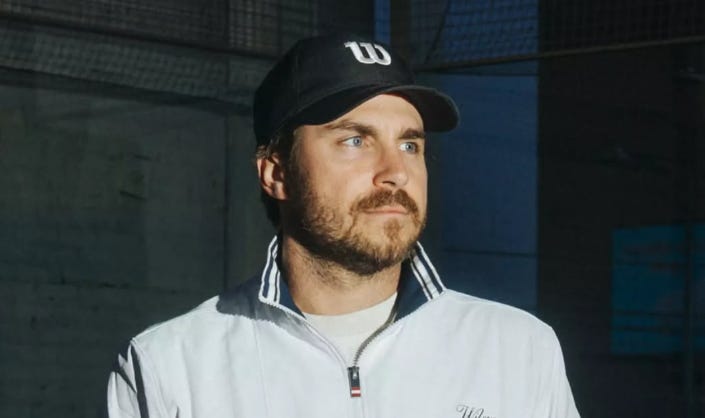
Great to meet you. I tore my ACL when I was 25 and have had both knees replaced, so I know where you’re coming from knee-wise.
I tore my ACL in the same knee twice. I had the interior meniscus and ACL, and then the exterior meniscus and ACL. Soccer is one of those sports where you don’t control every movement because it’s an impact-contact sport. I stopped playing a few years ago.
Let’s start with how you ended up in Los Angeles. Was it for padel, or something else?
I moved to L.A. for a job at an interior design and architecture firm, HBA — Hirsch Bedner Associates. I was a product designer there, and eventually I became more of a branding and industrial designer. We developed hotels, casinos, resorts, apartment complexes — things like that.
Then I tore my ACL the second time. I had surgery at Torrance Memorial Hospital, and I tried to find a PT, gym or wellness center close to the hospital because I had to go there for revisions and follow-ups.
I found a club called South End Racquet & Health Club. They had two padel courts, and I thought, “Okay, this is destiny. This is meant to be.”Right after rehab, I started going to that club every day after work. I met a lot of cool people there — Spanish people, Mexican people, tennis players, padel players. It was a very small community at the time.
Around the same time, Sunset Padel Club closed.


What was Sunset Padel Club?
Right now it’s called The Padel Courts in Hollywood. Before that, it was called Sunset Padel. I believe it had two Spanish owners, though I don’t remember exactly. They closed after a few years. The market was too early for padel.
I think the progression of the sport in L.A. was that Sunset Padel and South End came first. They opened at a similar time, maybe a year apart. Then Sunset Padel had to close, but South End kept going.
What year was this?
I think Sunset Padel closed in 2015. I found the club in Torrance and started playing there. Because of my background in padel, and as I started getting in shape again, members would ask if I could give them a few tips or help them with a few baskets of balls.
Eventually, I started giving lessons in my spare time. That’s how I started. I was there from 2018 to 2024.
And you were still working your full-time job in design?
Yeah. I would go to the office every day at 8 a.m., leave around 5 or 5:45 p.m., then sit in traffic for 45 minutes to an hour going to Torrance. Then I’d play from 6:30 to 9 p.m., or whenever we wanted to stop.
That’s where I met Pablo Barajas, who was my partner. In 2019, we started playing the USPA tour — tournaments around the U.S. That’s when I started committing a little bit more. It wasn’t just going after work to play and have fun anymore. I started skipping games so I could practice more. That’s how it started.
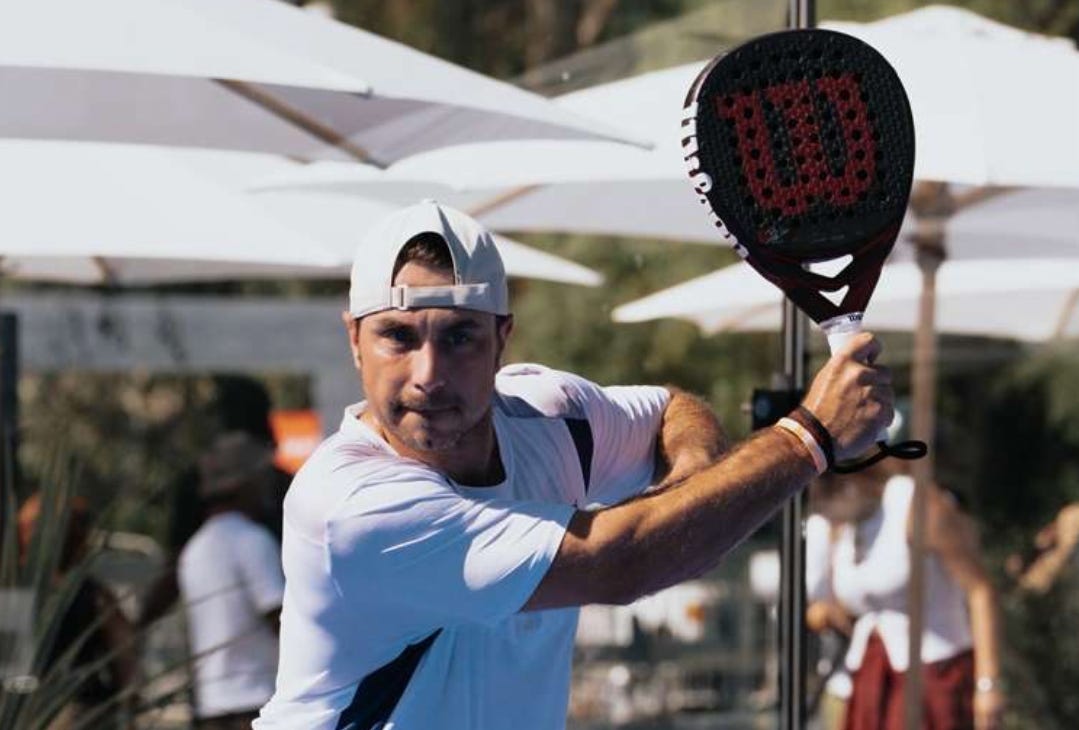
How did your playing career go?
In 2023, I ended up being ranked 13th in the country. The best 16 players qualified for the Masters and I played it that year.
During that time, I was already negotiating with the new owners of The Padel Courts. In March 2024, I started working there as the head coach.
Because I was already working from home, I had a lot of flexibility. I started thinking, “How can I make this work?” My job was very stable and comfortable, but I had always been linked to sports — soccer, padel, surfing, judo, field hockey, whatever it was.
So in 2024, the opportunity was there. I started doing everything from programming to teaching clinics, giving lessons, organizing open play and helping with the pro shop. All the padel operations were my responsibility.
The owners were not familiar with the sport, but one of them had lived in Dubai for a year and saw what padel was like there. He thought, “Why don’t they have anything like this in L.A.?” That’s how we started.
I worked there all of 2024 and 2025. At the beginning of this year, they sold The Padel Courts to another group. But at that point, I was already committed to the LAPC adventure.
Steve (Shpilsky) and I met each other at The Padel Courts during open plays and clinics. The first clinic he had was with me. At the beginning, it wasn’t an approach for me to join them. He was just chatting with me as a friend: “We’re starting this thing. We’re looking for people.”
Eventually, he said, “We’re looking for a GM. We’re looking for coaches. Would you be interested in talking?” I said yes.
He didn’t want to just poach somebody from The Padel Courts, but the sale of that facility was part of the situation at the time. So I said, “Let’s see what you have and what you’re trying to do.” That’s how we connected. It felt like a really interesting project.
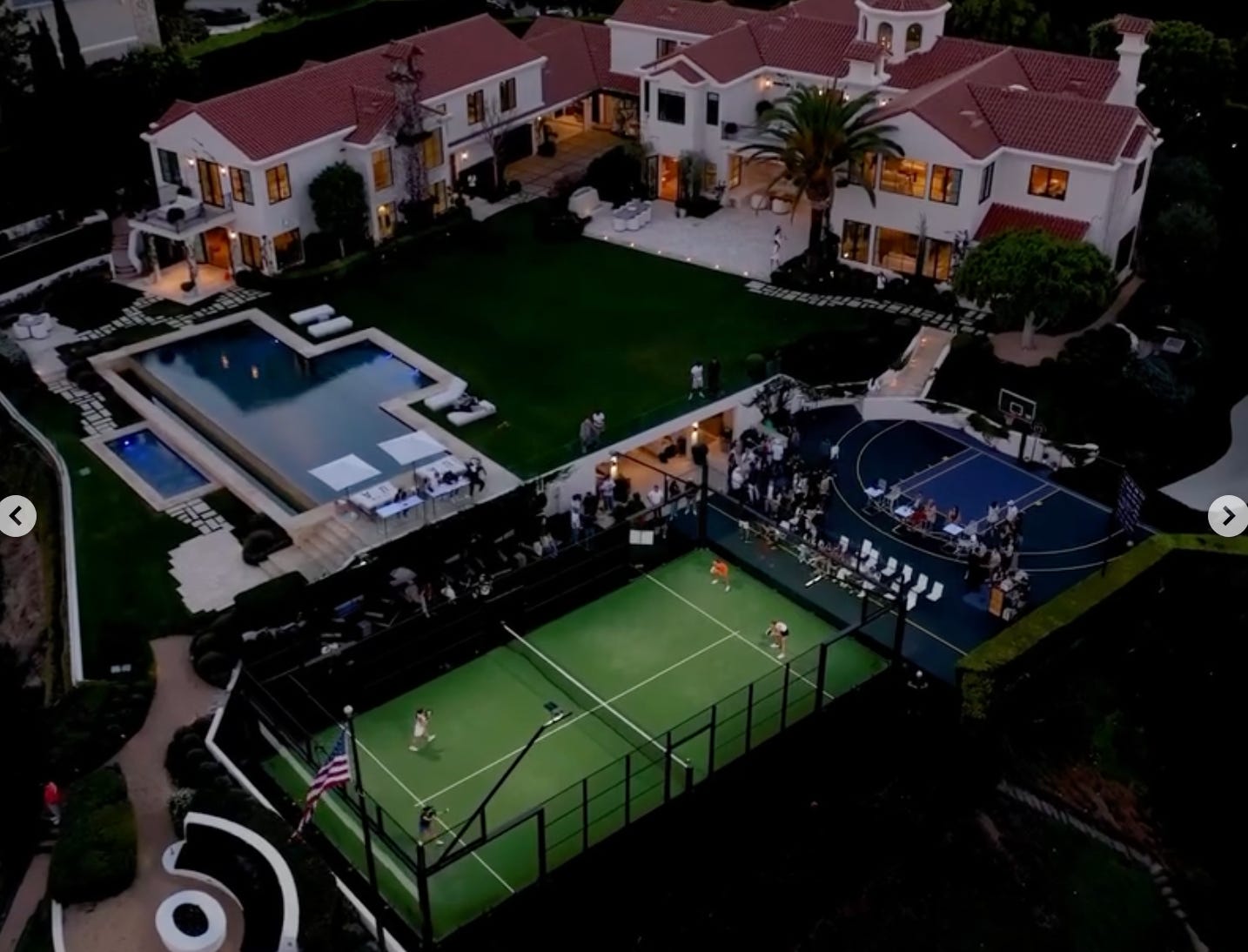
One of the cool things I’ve learned about LA is that it has a lot of padel courts at private houses. When did that start?
By 2018, when I moved to L.A., there were three or four houses with padel courts. There was a house in Bel Air and one in Beverly Hills. Those courts were built around 2017 or 2018, I think. Probably in the last three years, we’ve had more private courts built at houses than in all the years before.
Are large numbers of private padel courts exclusively an L.A. thing?
As far as I’m concerned, yes. I don’t think it happens the same way in Europe or South America because there is a more open approach to the sport. Padel started in country clubs and was kind of an elitist game in the ’80s and ’90s. You had to have access to a tennis club or country club.
But after 2000, everybody wanted to get into the sport. The U.S. market now is where the Spanish market was 25 years ago. We’re in that stage where you can feel that something is cooking. There is a lot of interest, a lot of new ventures, a lot of new money coming in. But it’s still small enough that people don’t have access to padel easily or affordably.
The private-house scene here is unique. I think it’s part of the social structure of L.A., where you have big residential areas with big backyards and space. The people who have access to that wealth travel and experience the sport in other countries. Then they come back and say, “Hey, my friend just built one. I’m going to build one too.”
Does that happen in the other big U.S. padel cities like New York or Miami?
I don’t think that happens in New York. It’s more of an urban area.
Miami got really big really fast because of South American culture. Miami has the largest Argentine population in the States, along with people from Venezuela, Puerto Rico, Cuba, and other countries.
Argentina, along with Spain, is one of the main countries for padel. That’s why Miami grew so fast, but I don’t think the private-court scene is as big there compared to L.A.
Los Angeles also has a lot of folks from those same countries, and from Mexico, where padel is big. Is it comparable to Miami in that way?
L.A. is more socially layered. Right now, only a certain portion of the population has access to padel in L.A. because it’s expensive, regardless of where you’re from.
The padel community in L.A. is still more high-end. But it’s starting to open up a lot. I feel like in the next six months or year, everybody is going to have access to an affordable padel court.
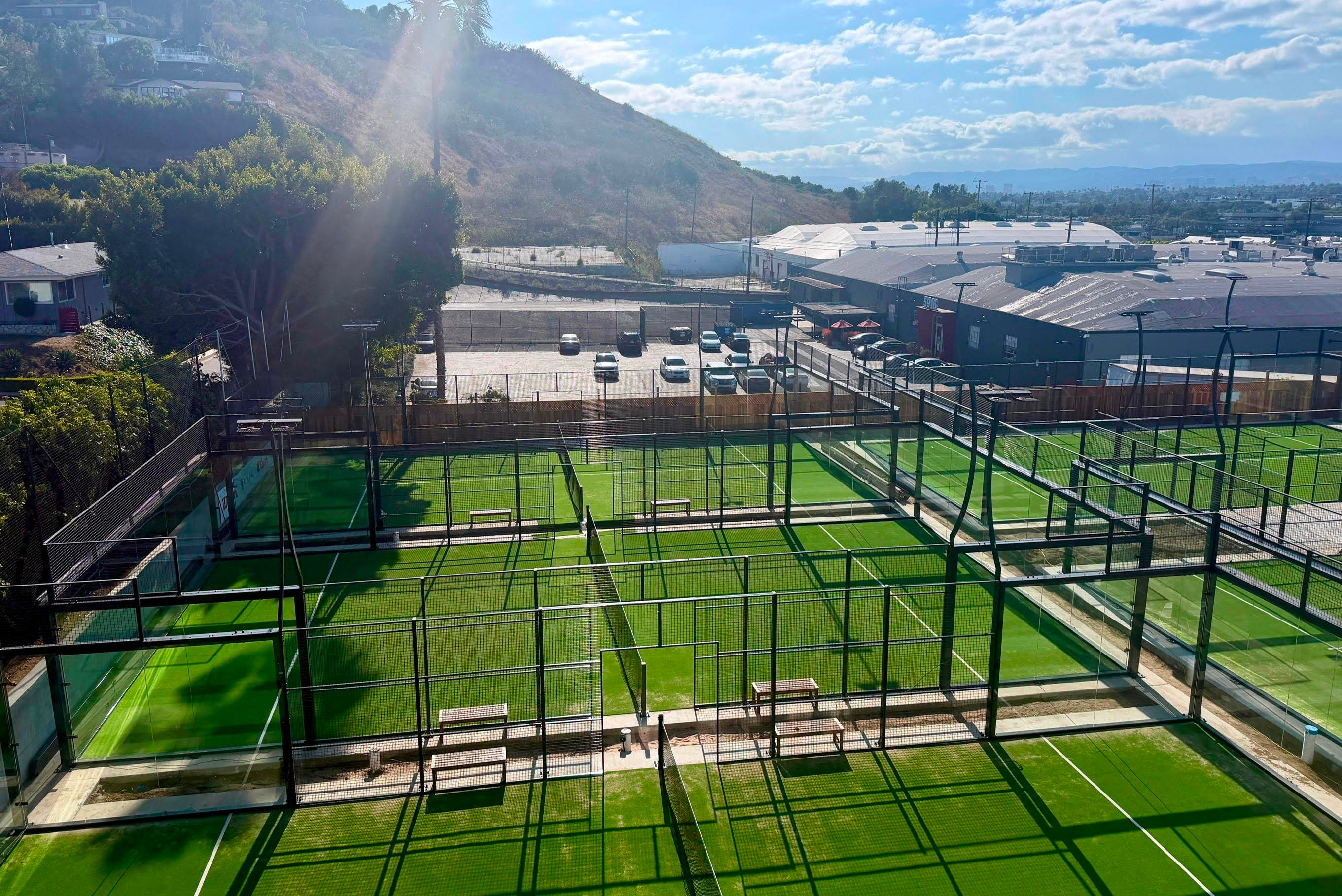
There are a lot of padel clubs going up in Los Angeles now, and in Southern California in general. Is there room for everybody, or is there going to be a shakeout?
This is something we discuss a lot among those of us already in the community.
Because we are involved day after day in the sport, we don’t always notice the growth until certain milestones happen every year, like the L.A. Cup. We used to have only three teams per division, and now we have 100 people who want to play.
Those kind of milestones make you realize the sport is growing. So I don’t think there are enough padel courts for the demand we are going to have. There is going to be a moment when you realize the sport is booming, and you have to be ready before it happens. Otherwise, you are late.
We have the FIFA World Cup this summer. We have the Olympics. We have padel probably becoming an Olympic sport in the next Olympics or the one after that. There is going to be a moment when we have so much demand that we won’t be able to pretend anybody is going to have a monopoly on padel in L.A.
I’m from a town in Spain with 180,000 people, and we have at least 20 clubs. Nobody is fighting for players. So if that pattern follows, or Miami’s, I can’t imagine how anybody would say, “We have too many clubs right now.”
What about coaches? Do we have enough padel coaches in Los Angeles?
That’s the million-dollar question.
I’m not worried about how many coaches we have. I would ask, “How good are the coaches right now?”
I don’t want to be negative. Right now, there are very good coaches, but there are not many of them. The issue is the quality of coaching. I’m not saying there is bad coaching in the United States. I’m saying that because it’s very early, it’s easy to get into the sport and start coaching.
Can you give me a story or amusing anecdote from your time in L.A. padel?
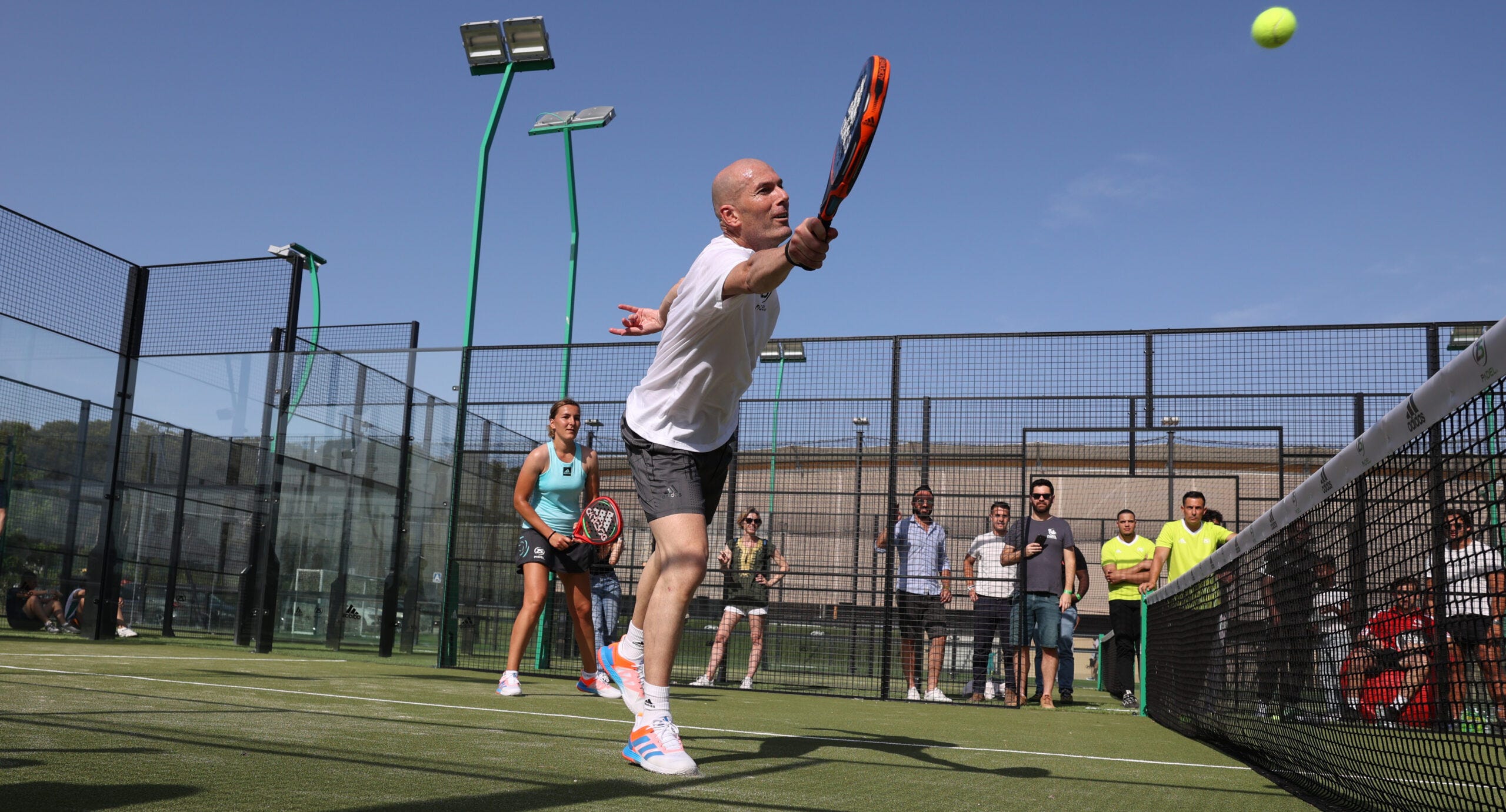
I’ve played with all kinds of celebrities here in L.A., but the highlight of my padel life in L.A. — and this is because I have a soccer background — was when I was giving a clinic one night and all of a sudden a reservation came in under the name “Frank”.
It was three guys, and the fourth one was wearing a hoodie. When he took it off, it was Zinedine Zidane.
We literally stopped the lesson. The guys I was teaching and I tried to get a picture with him. We actually got a picture with him. Then we stopped the lesson and just watched him play.
Was he good?
He was pretty decent. Pretty good. I would say he’s high-intermediate-ish.
It was very random. I was alone in the club, with only two players, giving a lesson. Then all of a sudden he walked in like it was nothing.
Things like that happen all the time because of padel in the States. I have had more random situations than ever. Padel is one of those sports here, because of the community and how it’s growing, where there’s always some celebrity, some friend, or some kind of serendipity that gives you amazing stories.
Enjoy this article? If so, please be sure to subscribe to Padel Nation to get exciting updates and important insights on the rapidly emerging U.S. padel scene like this one delivered directly to your inbox 2X weekly — or share it with a padel-playing friend.
Finally, as always, a big thank you to the friends and preferred partners of Padel Nation who help make posts like this possible, including:


Interested in becoming a friend or preferred partner of Padel Nation? Drop us a line here and let’s talk!
Oh, and one other thing… I’ve actually got a full-blown padel book coming out in July. So, if you enjoy the work I’m doing in the U.S. padel space, you can support me by pre-ordering a copy (or two!) online at Amazon or Barnes & Noble. Many thanks in advance!