



Editor’s note: The following (lightly edited) feature article is from regular guest contributor Scott Matulis, a leading West Coast padel writer whose work appears in numerous racquet-sports publications, including his own padel Substack.
As a padel journalist, I’ve done deep dives into the padel industry in several U.S. cities and I’m always amazed at how the sport has taken root, literally clawing itself into being in places where hardly anybody knows what “padel” is (let alone how to pronounce it properly).
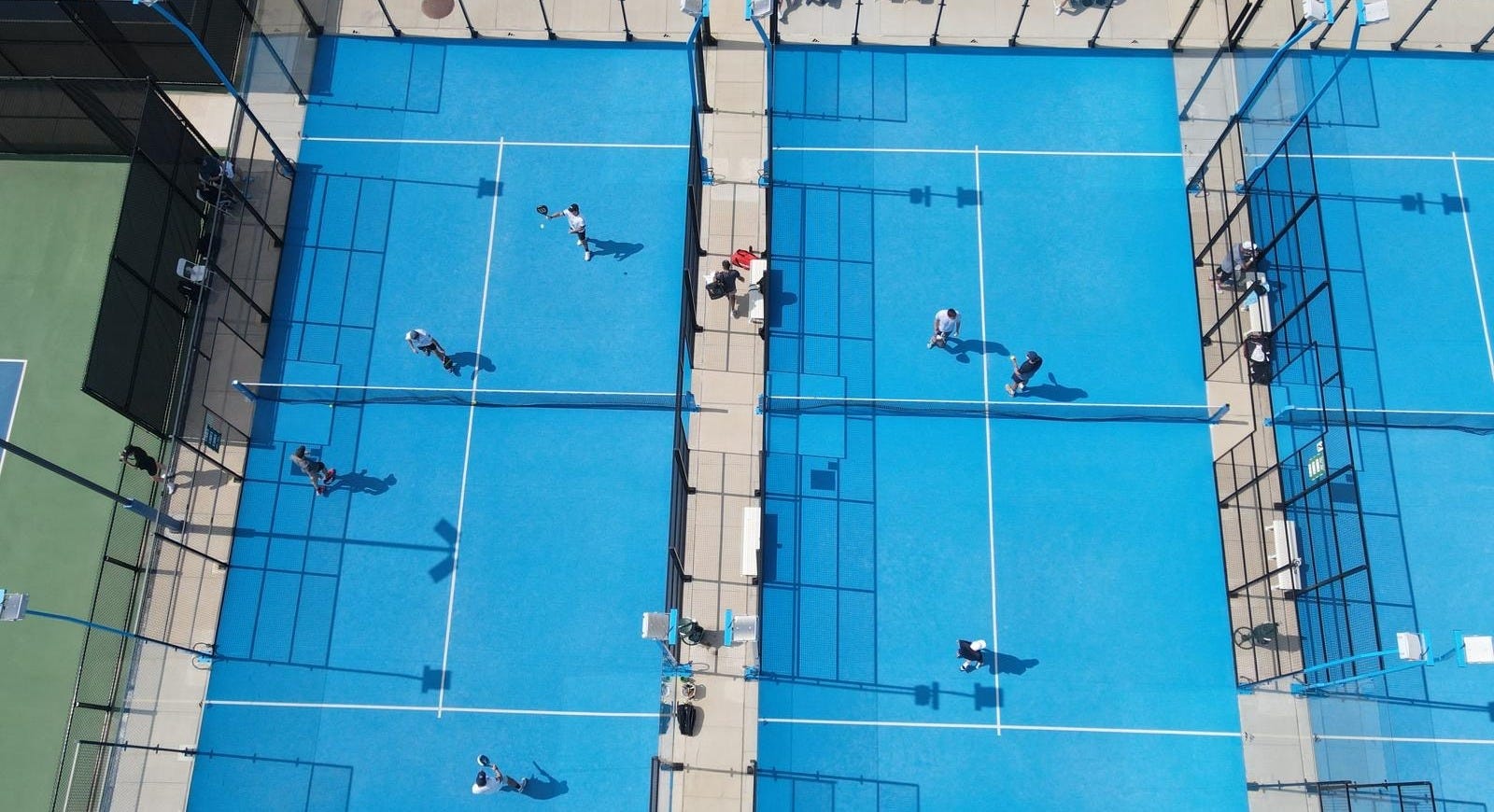
A month ago, I went to Dallas on vacation and spent a day visiting padel clubs. I saw some amazing facilities and spoke to some very smart, very driven padel operators. The interesting thing about Dallas’s current padel market is that it all grew out of three courts added to a private tennis club in 2017.
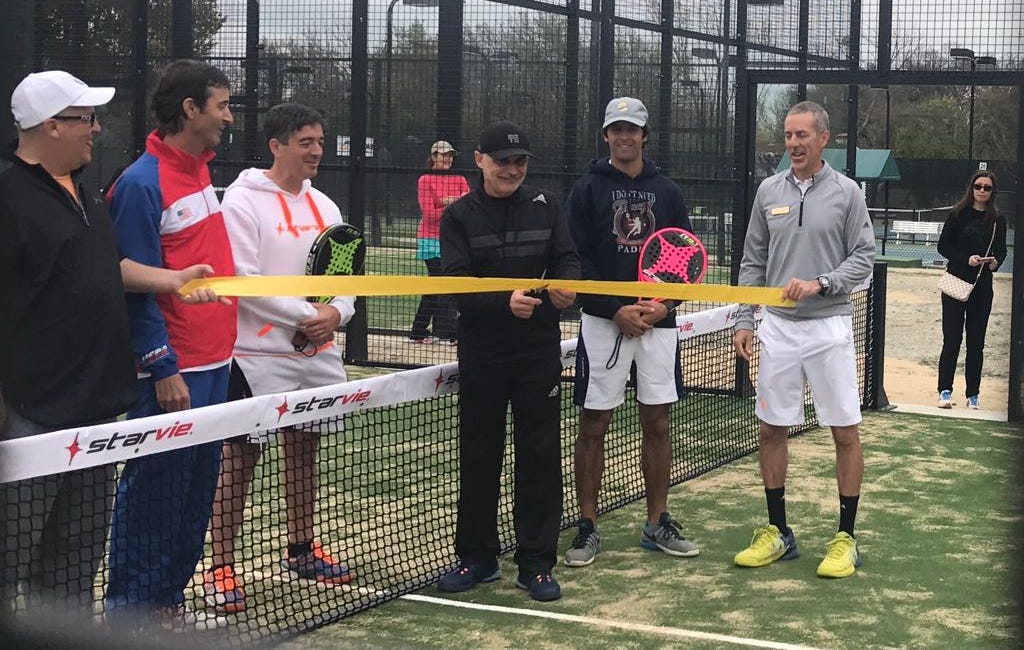
That year, when there were fewer than 20 padel courts in the whole U.S., Glen Agritelley, father of current U.S. padel standouts Nico and Will, added three outdoor courts to T Bar M, his 30-court private tennis club in central Dallas.
In a recent conversation, Agritelley told me:
My intention was to bring the club back to world-class prominence. Some of the best tennis matches in the world had taken place in Dallas, and I wanted to bring professional tennis back to the city. One of the things I’ve always done is continuously add value to my members and try to differentiate myself. I’ve always been at the bleeding edge of trying new things.
After Mike May, one of the country’s earliest court installers, spoke to him about padel at The Houstonian Club in Houston, Agritelley suspected padel might just be that bleeding edge and started doing his homework.
As he recalls:
I looked at padel in 2017 and I started to do a bit of research and there were only like two courts in Texas, a couple of courts in California, and a few courts in Miami. At the same time, padel was blowing up in Europe and South America. I was blown away when I discovered a stat showing five million people playing padel in Spain. Sweden was building courts like crazy.
I talked to a lot of people, a lot of South Americans and Europeans. They convinced me that this was a legitimate sport, and that at some point it would be an Olympic sport. So I really wanted to jump on board. I was super early with it, but it was in that vein of differentiating ourselves.
May showed up with two experienced installers and three Iber courts, all of which had to be imported from Spain.
The Small Start of Something Big
T Bar M experimented with different membership structures to incorporate padel into the club’s revenue base. Initially, people who had played in Europe on inexpensive public courts balked at paying country-club prices.
The club ended up offering a padel membership that included access to padel, fitness and the restaurant. And over the ensuing years nearly every branch of Dallas’s current padel market can be traced, directly or indirectly, to those three courts.
According to Carlos Crisostomo of North Texas Racquet Club:
Almost the entire community started building out from T Bar M. It was a somewhat small but very tight community. North Texas Racquet Club came from people who played there. Net Racquet Club came from that community and eventually led to Dallas Padel Club and Padel39.
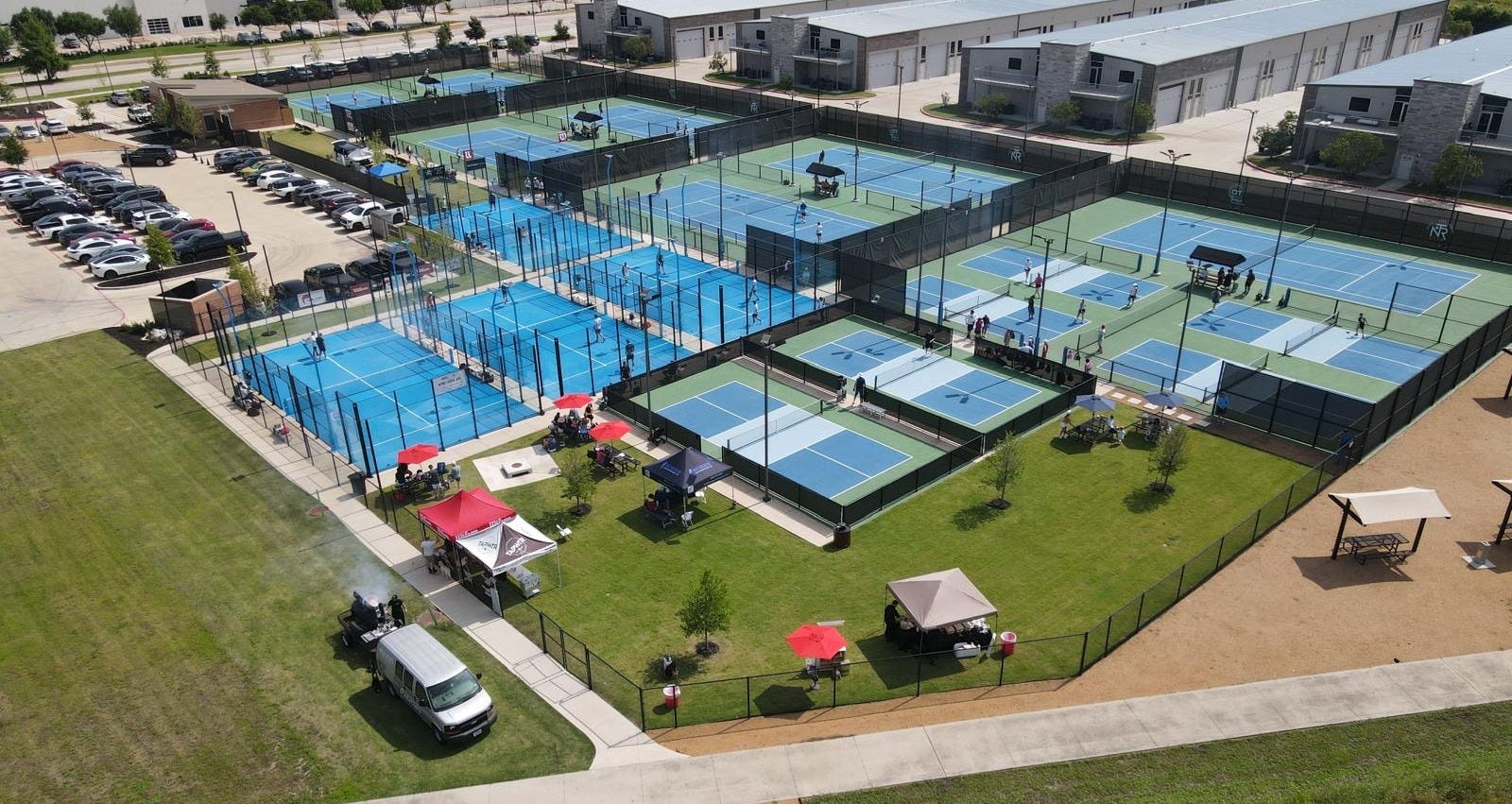
The shorter branch of the T Bar M tree starts with North Texas Racquet Club, opened in 2024 by T Bar M alumni Omar Trevino and Alejandra Suarez. Trevino operated a junior tennis program in Frisco, TX. Suarez is an elite padel player who has represented the United States internationally.

As Crisostomo explained to me:
Omar, Alejandra, and I had all been members at T Bar M because we liked playing padel and it was the only place available then. But Omar had operated his tennis academy in this area for a long time, and building a club was always the plan.
Initially, it was going to be only tennis. Then padel started becoming a thing here. Omar is Mexican, so padel was already a thing in Mexico. He said, ‘Since it is becoming a thing here, let’s see if we can add some padel courts.’
Frisco is a self-contained, family-oriented city of approximately 250,000 people, many of whom play tennis or pickleball. It is also heavily regulated, which made it difficult for Trevino and Suarez to find a location for a 17-court racquet facility.
In Crisostomo’s words:
There was really one area in Frisco where sports facilities were allowed, called Sports City. We were limited in where and how we could do it because everything in the city is planned ahead of time. That was very challenging. Even today, everything requires a permit, everything takes a long time, and it has to be done the way the city requires.
North Texas Racquet Club opened in March 2024 with seven tennis courts, six pickleball courts and four padel courts, all outdoors and lighted. It has since added an eighth tennis court.
The Price of Progress
The longer branch of the T Bar M tree starts in 2023, a year after Agritelley sold the club to local hospitality group WoodHouse. The new owners spent $80 million transforming the traditional racquet club into the luxury private club known today as Banner House at T Bar M.
Michael Apple, the padel director at Banner House, gave me a tour, and the club is stunning. It was hosting an ITF international junior tennis tournament on the day I was there and the place was bustling. Apple walked me out to the padel courts, and it was literally like walking through racket sport heaven. Three clay tennis courts, abundant hard courts, and what I thought were the original three padel courts, still looking pristine.
I didn’t find out until later, when I spoke to T Bar M athletic director Chris Ware, that those three courts were not the original courts that May had installed in 2017. When Banner House upscaled the club, they replaced those courts with three brand-new panoramic courts that they installed on a different part of the property.
They took two of the original courts and installed them in Preston Playhouse, a new facility next door to Banner House that, in addition to indoor padel, features nine indoor pickleball courts, which were jam-packed the day I was there. Nobody could tell me the current whereabouts of the third original court.
As Ware explained it to me:
WoodHouse came in and wanted to put tens of millions of dollars into the club. Not only did [they] believe in padel so much, [but] they invested an enormous amount of money to bring in new panoramic courts and then also to put in the courts in Preston Playhouse. Let me tell you, moving padel courts indoors is not cheap.
Even though legacy members could stay at the club, the hike in initiation fees and monthly dues transformed Banner House from a relatively cheap place to play padel to something a bit more exclusive.
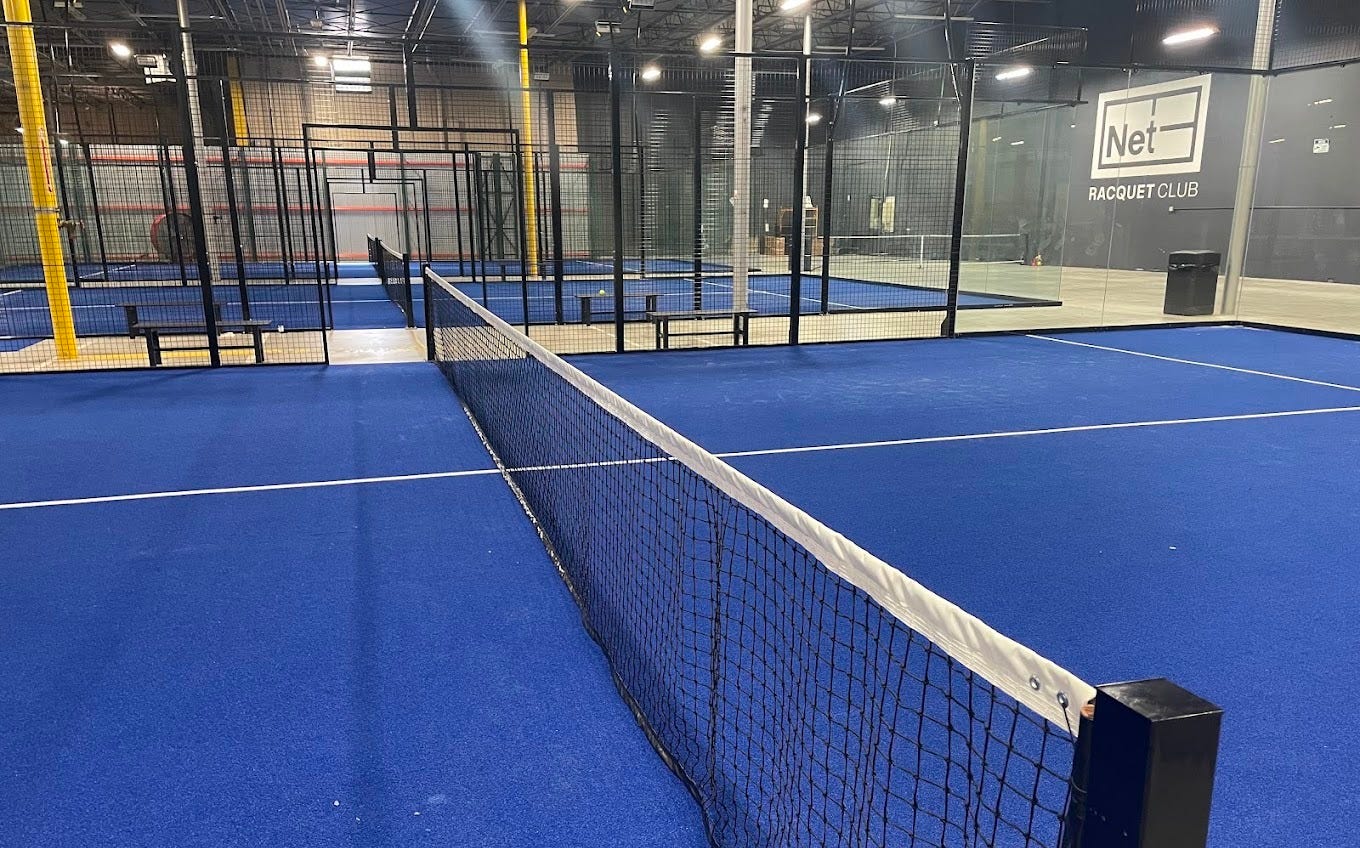
In response, a group of T Bar M members led by Albert Figueiras launched Net Racquet Club in a Farmers Branch, TX warehouse, offering the first three indoor courts in Dallas.
Figueras recalls:
The membership increase was the final trigger. I had been looking for a warehouse before that because I wanted to open a club, but it’s not easy in Dallas. You need the perfect height. You need the landlord to give you permission for sports use, and the city has to allow it.
Stepping Stones
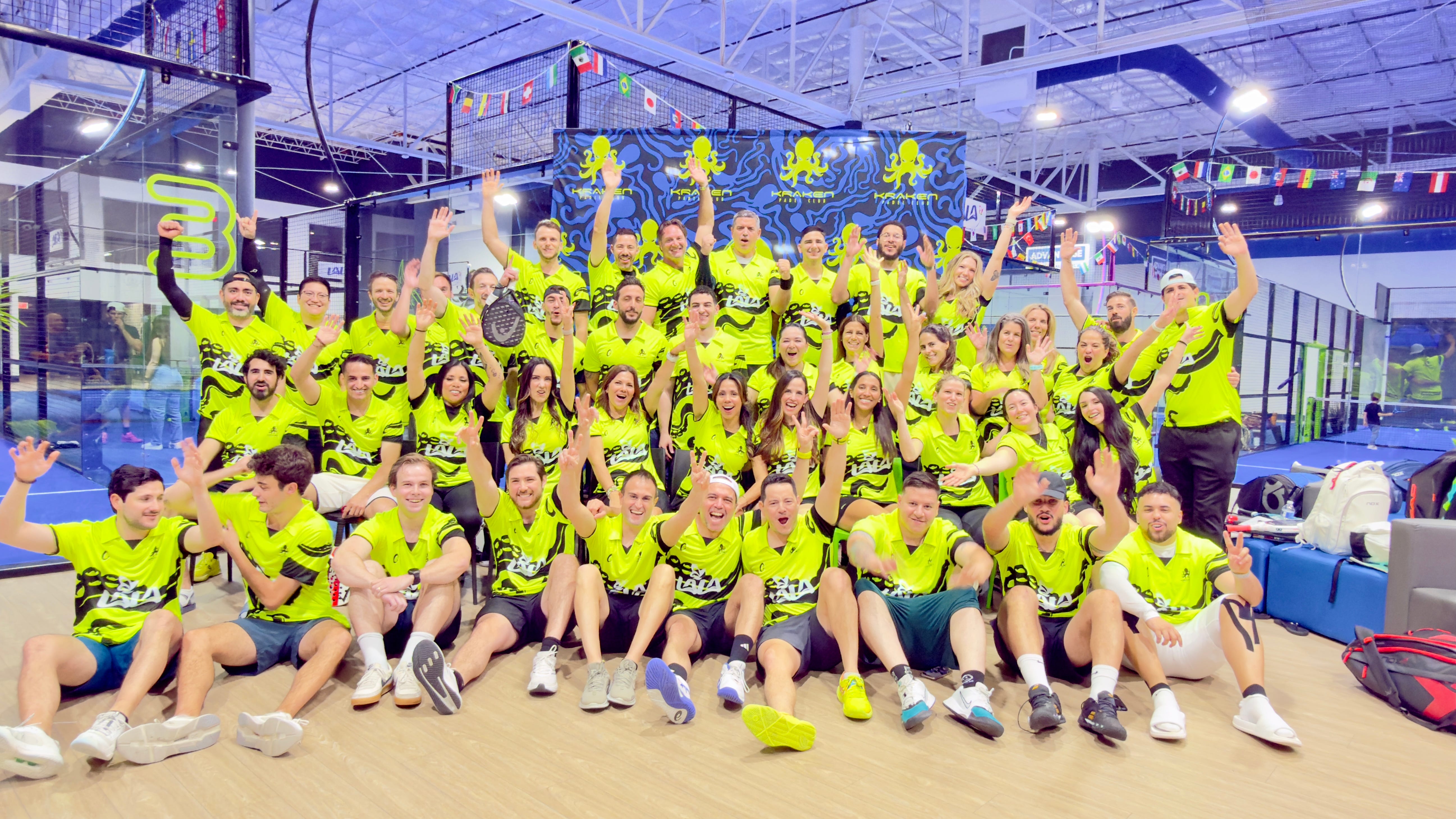
There was no air conditioning at that club, but Rodrigo Fernandez (who actually penned a Padel Nation guest article earlier this year) and the three friends with whom he would later start Kraken Padel Club played there regularly.
Of Net Racquet Club, Fernandez tells me:
My co-founders and I used to go there. We loved it and we thought we should do it our own way. None of us had ever had any experience building a sports club. The good thing is that every partner has a unique background. We don’t have multiple owners doing the same thing.
It took Fernandez and his partners eight months to find a suitable building. Their requirements included an indoor, air-conditioned space with ceilings at least 24 feet high and enough room for food service, social activities, and a pro shop.
Convincing landlords to let them install glass courts inside a building was difficult because few understood the sport. There were also requirements involving fire alarms, parking, and restroom capacity.
Kraken Padel Club eventually signed a 10-year lease on a former Tom Thumb grocery store in Farmers Branch, and the partners chose to install four Super Panoramic UNIPADEL courts with Spanish turf. Having four courts made the numbers work — and they had room for a fifth, but instead used the space for a cafe to strengthen the club’s social appeal.
Kraken also added lounge and social areas, co-working space, a gym, a pro shop, and PlaySight Smart Play cameras on each court. The club officially opened in January 2025 with a cool vibe and ample parking.
The Dallas Padel (R)evolution
Net Racquet Club, meanwhile, sold its courts and customer database in November 2024. The new owners moved the operation to Carrollton, TX and ran it as Dallas Padel Club. Then, in January 2026, Austin-based Padel39 announced that it had taken over the club, describing it as the first publicly announced acquisition of a U.S. padel facility.
Founder and CEO Will Boyce (who I recently profiled) picked Dallas for Padel39’s expansion because of the city’s established tennis and pickleball culture, Fortune 500 companies, and substantial Hispanic population. Just as importantly, Kraken and the other clubs had already begun the expensive but crucial work of introducing padel to the people of Dallas.
When I visited Padel39 in Dallas, construction crews were everywhere. The three indoor courts remained operational, and there were people waiting to play, but the rest of the property was clearly being transformed.
“We kept the court locations, but we redid the courts and essentially everything else,” Boyce told me. “We tore it down and redid it all.”
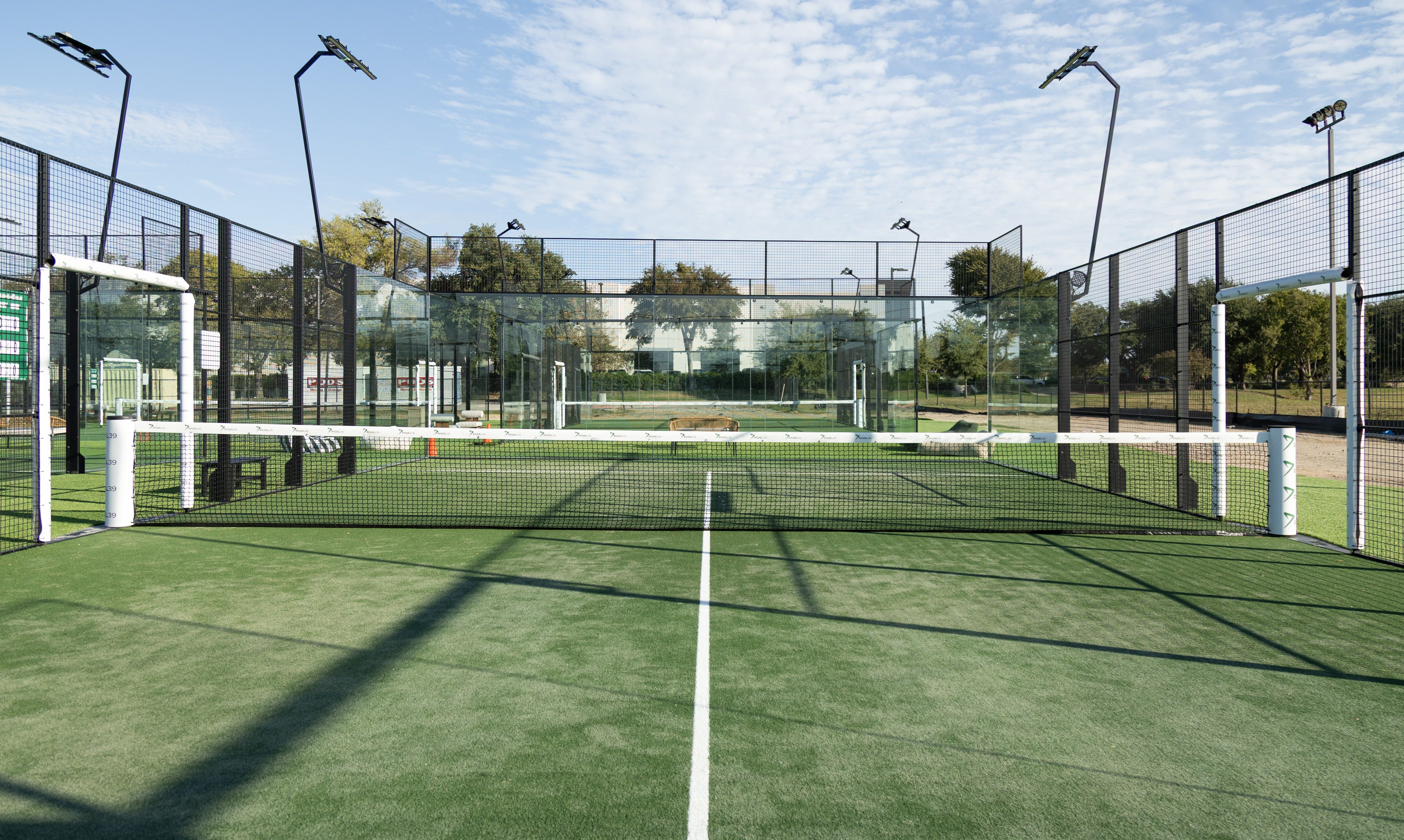
In addition to the three existing indoor courts, Padel39 North Dallas — which will officially re-open November 7 — will also offer seven outdoor courts, four of them covered, with room for more.
Boyce told me he learned from his first club in Austin that a club’s social offerings were crucial to its success, so the Dallas facility will also include a cafe, locker rooms, an indoor gym, a sauna, a cold plunge, and other recovery amenities. Plans also call for a fully stocked pro shop, an indoor bar, and a landscaped terrace extending from the building to the courts.
However, the transformation is taking time as the club needed a special-use permit that required city hearings. Padel39 also paid tariffs on its imported MejorSet courts and invested in premium lighting, Mondo turf, and the other infrastructure required for a premium look and feel.
Boyce explains:
Acquisitions take time because of the paperwork, liabilities, and releases. We essentially stripped the business down and purchased its assets. Then you have to go through design, permitting, and the buildout. This is a multimillion-dollar buildout. We made a strategic decision to value-engineer the construction and source the best subcontractors at the best combination of quality and price. We’re excited that it’s finally going to open in November.
But Padel39 is not done expanding. The company has developed proprietary market-analysis software that uses AI to analyze demographic, income, and public utilization data to score potential markets and track padel’s growth in a market over time.
The End of the Beginning
Back in 2017, Glen Agritelley did not have utilization data, ZIP code rankings, or another Dallas padel club to study when he agreed to install three courts at T Bar M. He took a risk early in the game, and the Dallas padel community continues to benefit from it.
Nine years later, operators are converting grocery stores and health clubs, spending millions on hospitality and using proprietary software to rate markets. The player pool is expanding and has a variety of clubs to choose from. And there are more on the way. All with roots in those three original courts.
Agritelley reflects:
I think the future for Dallas padel is really good. One of my goals for padel when we first did this, because of where it’s located centrally in the U.S., was to make Dallas a hub for padel in this country.
After seeing the clubs and talking to the people who are building them in Dallas, I can confirm that he’s succeeded.
If you enjoyed this article, please be sure to give it a like and/or restack below to help spread the word (yes, Substack has an algo, too!).
Please also consider subscribing to Padel Nation (for free!) to get exciting updates and important insights on the rapidly emerging U.S. padel scene like this one delivered directly to your inbox 2X weekly — or sharing it with a padel-playing friend.
Finally, as always, a big thank you to the friends and preferred partners of Padel Nation who help make posts like this possible, including:


Interested in becoming a friend or preferred partner of Padel Nation? Drop us a line here and let’s talk!
Oh, and one other thing… my brand-new 352-page padel book was just recently published. So, if you enjoy the work I’m doing in the U.S. padel space, you can support me by ordering a copy (or two!) online at Amazon or Barnes & Noble.
Or if you’re a club owner and you’d want to carry a handful of copies in your pro shop for “padel curious” people who are interested in trying the sport out but don’t know quite where to start, let me know and I can connect you with my publisher’s wholesale department.
Many thanks in advance!